
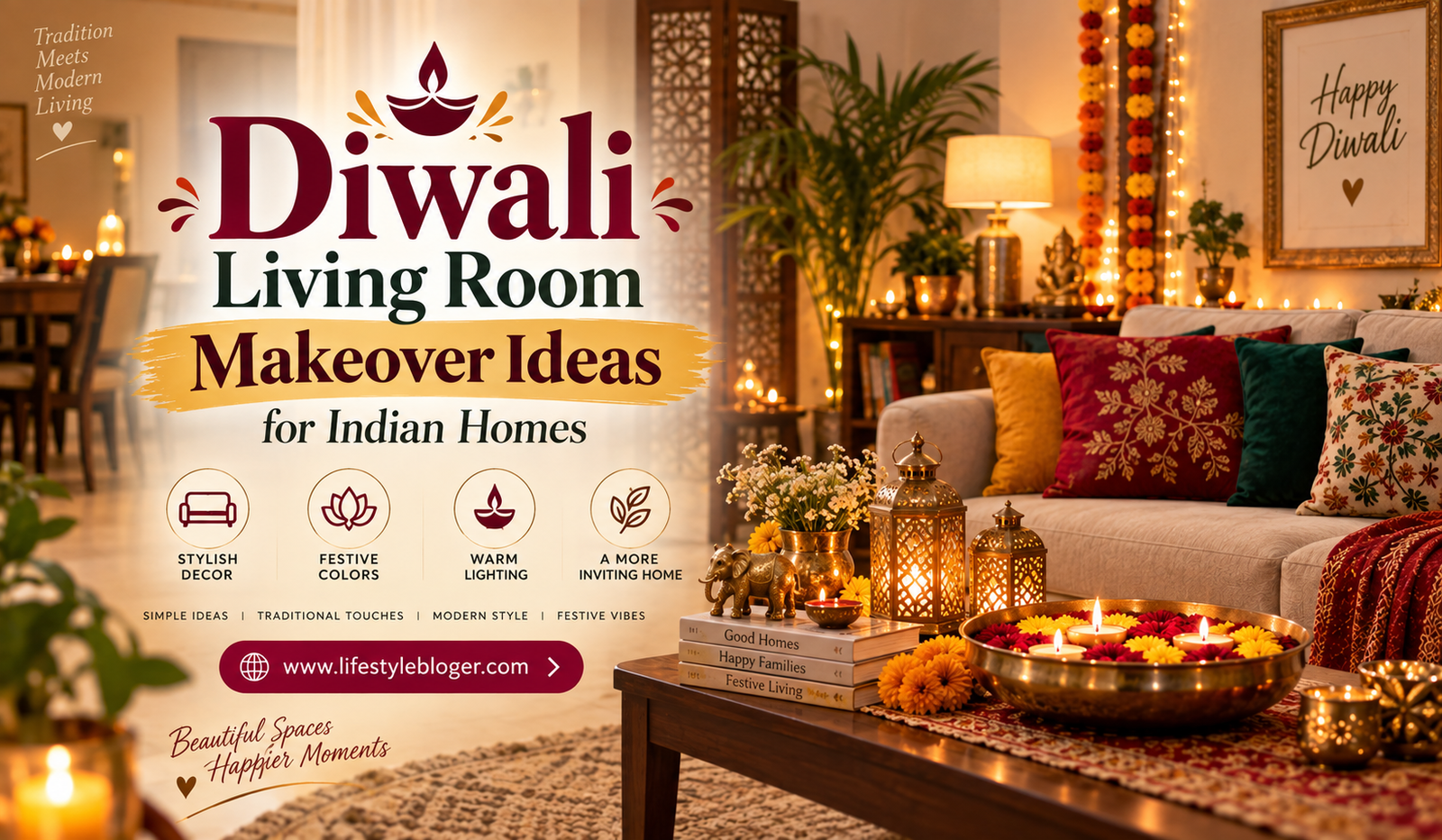
Diwali is the perfect time to give your living room a fresh look. It is usually the first space guests see when they enter your home, and during the festival season, it often becomes the centre of family gatherings, conversations, sweets, photographs and celebrations.
A Diwali makeover does not mean buying completely new furniture or spending a large amount of money on decoration. Small changes in lighting, colours, textiles and traditional accents can make the room feel completely different. The key is to create a space that feels festive while still remaining comfortable and practical.
Whether you live in a compact apartment, a traditional Indian house or a modern urban home, these Diwali living room makeover ideas can help you create a warm and welcoming festive atmosphere.
Start With a Clean and Clutter-Free Room
Before adding decorations, give your living room a proper reset. Diwali is traditionally associated with cleaning and preparing the home, and this is also the easiest way to make your new decorations stand out.
Remove items that are rarely used, organise books and magazines, clear unnecessary objects from the centre table and rearrange anything that makes the room feel crowded.
You do not need to remove everything. Keep the furniture and accessories that contribute to the room’s character and temporarily store items that simply take up space.
Once the room is organised, even a small amount of Diwali decoration can have a much greater visual impact.
Give the Sofa a Festive Refresh
You do not need to replace your sofa for Diwali. Instead, change the cushions and add a festive throw.
Colours such as deep red, mustard, orange, emerald green, royal blue and warm gold can instantly introduce a festive feeling. If your existing sofa is neutral, colourful cushions can provide an easy seasonal transformation.
For a more traditional Indian appearance, look for cushion covers featuring embroidery, mirror work, block prints or subtle metallic details.
Avoid putting too many different patterns together. Two or three complementary designs usually look more polished than a collection of unrelated prints.
Bring in Warm Diwali Lighting
Lighting can completely change the mood of a living room after sunset.
Instead of depending only on the main ceiling light, introduce smaller sources of illumination around the room. A string of warm fairy lights can be placed around a window, bookshelf or decorative corner.
Table lamps, floor lamps and small LED lanterns can add additional layers of light.
The aim is to create pockets of warmth rather than making the entire room extremely bright. Soft lighting also works beautifully with traditional Diwali decorations and makes evening family photographs more inviting.
Create a Diya Corner
A dedicated diya corner can become one of the most beautiful parts of your living room.
Choose a small console table, side table, shelf or a low wooden platform and arrange several diyas around a simple rangoli-inspired design.
You can place flowers, brass bowls or small decorative elements around the diyas to complete the arrangement.
If you have children or pets at home, consider using LED diyas in areas where an open flame would be difficult to supervise. Real diyas can still be used in safer, visible locations.
Use Rangoli as a Living Room Feature
Rangoli does not have to remain only near the entrance. A small design inside the living room can become an attractive focal point.
You could create one near the main seating area, beneath a console table or in an otherwise empty corner.
If you do not have time to make a traditional rangoli from scratch, use reusable rangoli stencils, decorative mats or fabric-based designs.
For a contemporary home, a simple geometric pattern can look particularly attractive. For a more traditional room, floral patterns and bright colours can complement the rest of your Diwali décor.
Add Flowers Without Making the Room Look Busy
Flowers can instantly make a living room feel festive.
Marigold is a natural choice for Diwali because of its bright colour and traditional association with Indian celebrations. You can use fresh flowers in vases or create a simple garland for a doorway, window or wall.
If fresh flowers are difficult to maintain, high-quality artificial flowers can be used for parts of the decoration.
Rather than placing flowers everywhere, choose one or two areas. A flower arrangement on the centre table and a garland near the entrance may be enough.
Decorate the Centre Table
The centre table is one of the easiest places to introduce a festive touch.
Instead of filling it with multiple decorations, create one simple arrangement. A shallow tray can hold a small vase, flowers, a candle or LED diya and one decorative bowl.
You can also use a traditional brass or wooden tray as the base.
Remember that the centre table still needs to be functional. Leave enough space for tea, snacks and sweets when guests arrive.
Add Traditional Indian Décor
Diwali is an ideal occasion to bring traditional Indian decorative pieces into a modern living room.
Brass diyas, urli bowls, wooden artefacts, embroidered cushions, hand-painted pottery and traditional wall pieces can add personality without requiring a major makeover.
If your home already has modern furniture, one or two traditional statement pieces can create an interesting contrast.
For example, a simple modern console can look more festive when paired with a brass lamp, flowers and a small diya arrangement.
Give One Wall a Festive Treatment
You do not need to decorate every wall.
Choose one wall and turn it into the visual centre of the living room. This could be the wall behind the sofa, the TV wall or a relatively empty side wall.
A fabric wall hanging, festive artwork, decorative mirror, flower arrangement or string of warm lights can be enough.
If you want to make the wall more colourful, combine a few traditional decorative pieces instead of covering the entire surface.
This keeps the room festive without making it feel overloaded.
Introduce a Festive Fragrance
A living room makeover is not only about appearance. Fragrance can also influence how the room feels.
During Diwali, scents such as sandalwood, jasmine, rose, saffron or traditional incense can create a festive atmosphere.
Use fragrances moderately, particularly when food is being served. The goal should be a subtle background scent rather than something that dominates the room.
If you have guests who are sensitive to strong fragrances, a lightly scented candle or natural flowers may be a better choice.
Create a Comfortable Guest Area
Diwali often means more visitors, so your living room should remain comfortable after decoration.
Avoid placing decorative objects where people normally sit or walk. Keep pathways clear and make sure additional floor cushions do not create obstacles.
If you have limited seating, colourful floor cushions and a soft rug can provide extra places for guests to sit while also contributing to the festive appearance.
This is particularly useful in Indian homes where Diwali gatherings may include extended family and friends.
Use a Balanced Colour Theme
One of the easiest ways to make your makeover look coordinated is to select a small colour palette.
For example, you might choose:
- Warm gold with cream
- Orange with beige
- Deep green with gold
- Red with ivory
- Mustard with brown
You do not have to follow these combinations exactly. The idea is to select two or three main colours and repeat them through cushions, flowers, lights and decorative objects.
This creates a sense of connection between different parts of the room.
Make the Décor Feel Personal
The most memorable Diwali living rooms are not necessarily the ones with the most expensive decorations. They are the ones that reflect the people living in the home.
Display a family photograph, a handmade decoration, an inherited brass diya or a craft piece bought during a previous trip.
You could also create a small photo corner where family members can take Diwali pictures. A decorated wall, warm lights and a few flowers can create an attractive background without requiring professional equipment.
Personal details make the room feel lived-in rather than like a showroom.
Avoid Overdecorating Your Living Room
It can be tempting to add lights, flowers, cushions, lanterns, rangoli, wall decorations and several other accessories at the same time.
But more decoration does not always produce a better result.
Choose a few elements that work together and leave some empty space between them. This allows each decorative feature to be noticed.
A well-lit corner, an attractive sofa arrangement, a small rangoli and a simple diya display can be enough to give the entire room a festive transformation.
Final Thoughts
A beautiful Diwali living room makeover does not require a complete renovation. Start with cleaning and decluttering, then gradually introduce festive colours, comfortable textiles, warm lighting and traditional Indian accents.
Focus on creating an atmosphere where your family and guests can actually relax and enjoy themselves. Keep the seating comfortable, leave enough open space and make sure decorations do not interfere with everyday activities.
Most importantly, let the makeover reflect your own style. A modern apartment can celebrate Diwali with subtle gold accents and warm lighting, while a traditional home may look wonderful with flowers, brass décor, diyas and colourful textiles.
The best Diwali living room is ultimately not the one with the most decorations. It is the one that feels warm, welcoming, festive and full of life when everyone gathers together to celebrate.