
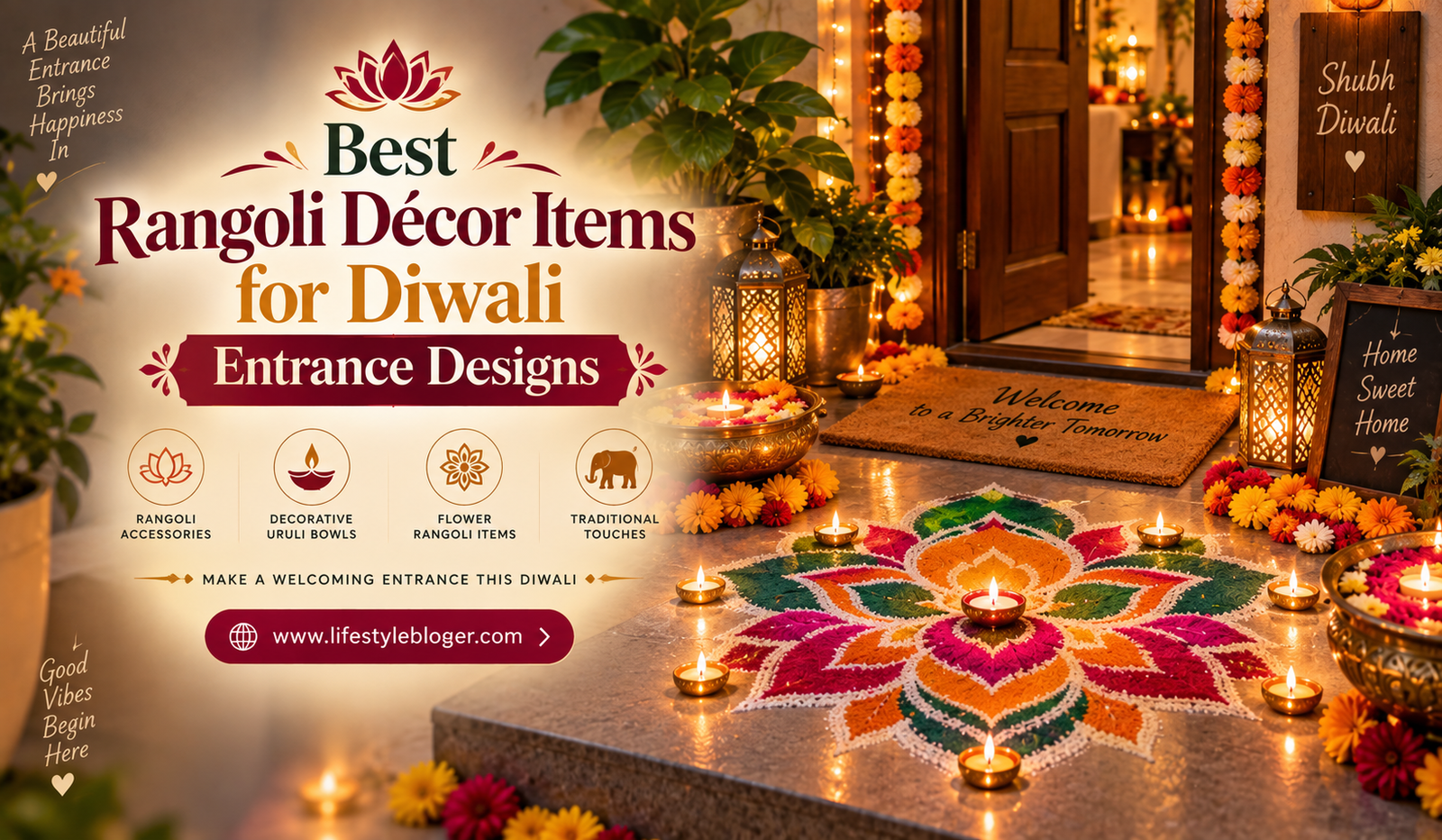
A Diwali entrance feels incomplete without a beautiful rangoli. It is often the first decorative detail guests notice when they arrive, making it a simple way to give your home a festive welcome. While coloured powders remain the foundation of traditional rangoli, adding the right decorative elements can make the design look richer, more detailed and more inviting.
The good thing is that you do not need expensive decorations to create an impressive Diwali entrance. A combination of diyas, flowers, petals, mirrors, beads, candles and traditional accents can transform even a simple rangoli into a festive centrepiece.
Whether you prefer a traditional Indian pattern or a cleaner modern design, these rangoli decoration items can help you create an entrance that feels special without becoming unnecessarily complicated.
1. Traditional Diyas
Diyas are probably the most natural decoration to place around a Diwali rangoli. Their warm glow adds both beauty and meaning to the entrance.
Instead of placing diyas randomly around the design, use them to define its shape. You can arrange small diyas around the outer border or position larger ones at important points of the pattern.
A circular rangoli, for example, can look beautiful with evenly spaced diyas following its outer edge. For a more contemporary arrangement, place four larger diyas at the corners of a square or geometric rangoli.
If the entrance is exposed to wind or you have children and pets around, LED diyas can provide a safer decorative alternative.
2. Fresh Flower Petals
Fresh flowers can give a rangoli a softer and more natural appearance.
Marigold petals are particularly suitable for Diwali because their bright yellow and orange shades immediately create a festive mood. Rose petals can introduce red or pink tones, while white flowers can provide contrast against darker rangoli colours.
You can use petals to create an additional border around the rangoli instead of mixing them directly into the design. This makes the main pattern easier to see.
Another simple idea is to create small petal clusters between diyas. The combination of glowing lamps and fresh flowers gives the entrance a traditional Indian character.
3. Decorative Rangoli Stencils
If creating detailed patterns by hand is difficult, rangoli stencils can make the process much easier.
Stencils are available in floral, geometric, traditional and festive designs. They can help you create consistent shapes without spending hours drawing each section.
For a more personalised look, use the stencil only for the central pattern and add your own coloured borders around it.
This works especially well when you want a neat design but do not have much time before guests arrive.
4. Coloured Rangoli Powders
The colours you choose form the visual foundation of your entrance design.
Instead of buying a large number of shades, select three to five colours that work well together. Bright pink, orange, yellow, green, blue and white can create a traditional appearance, while combinations such as white, gold and red can feel more elegant.
Fine powder is generally easier to use when you want detailed lines. Coarser decorative materials can be useful for filling larger sections.
For a modern entrance, you can also experiment with a mostly white rangoli accented with one or two stronger colours.
5. Small Mirrors and Reflective Pieces
Small decorative mirrors can add an attractive sparkle to a rangoli.
They are particularly effective when positioned around the outer sections of the design. When diyas are lit nearby, the reflective surfaces catch the light and create tiny points of brightness.
Mirror pieces can be used with traditional rangoli patterns, floral designs or even simple geometric arrangements.
However, use them selectively. Too many reflective elements can make a small rangoli look crowded.
6. Decorative Beads and Pearls
Beads can be used to create borders or separate different sections of a rangoli.
Gold-coloured beads can complement traditional Diwali colours, while white pearl-like beads can give the design a cleaner appearance.
One useful approach is to create a thin bead border around the outside rather than placing beads throughout the entire design.
This is especially suitable if you want your rangoli to look decorative without adding too many colours.
7. Floating Flower Bowls
A small decorative bowl filled with water and flowers can become an extension of your rangoli.
Place it beside the entrance design rather than directly in the middle. Add rose petals, marigold flowers or other suitable blooms to the water.
A floating candle or LED light can provide an additional glow after sunset.
This idea works particularly well when you have enough entrance space to create a small decorative arrangement rather than a single compact rangoli.
8. Brass Diyas and Traditional Urli Bowls
For homes with a traditional décor style, brass accessories can give the entrance a richer appearance.
A brass diya, small brass bowl or urli can be positioned beside the rangoli. Their metallic finish naturally complements warm Diwali lighting.
You do not need several large pieces. One statement brass item surrounded by flowers and a few smaller diyas can be enough.
The combination of coloured rangoli powder, yellow flowers and brass creates a classic festive palette.
9. Decorative Candles and LED Lights
Candles can add a contemporary touch to an entrance rangoli.
Place small candles around the design where they will not interfere with the pattern or create a fire risk. For homes where open flames are inconvenient, LED candles can achieve a similar visual effect.
Tiny string lights can also be used around the outer edge of a large rangoli. Warm white lights tend to blend naturally with traditional Diwali colours.
Avoid using bright flashing lights directly beside an intricate rangoli. They can distract from the pattern rather than highlighting it.
10. Marigold Garlands
Marigold garlands are another easy way to connect the rangoli with the rest of your entrance décor.
You can place a short garland above the doorway while using loose petals around the rangoli below. This creates a visual connection between the entrance door and the floor decoration.
If you have a large entrance, a pair of flower arrangements on either side of the rangoli can frame the entire space.
For smaller entrances, a few flower clusters are enough. There is no need to cover every surface.
11. Decorative Torans
A rangoli can look even more complete when it is coordinated with the doorway.
A traditional toran made from flowers, fabric, beads or decorative motifs can introduce colour at eye level while the rangoli provides decoration at floor level.
Try matching at least one colour from the toran with the rangoli. For example, an orange and yellow flower toran can be paired with a rangoli containing similar shades.
This creates a more intentional entrance design rather than making each decoration appear separate.
12. Wooden and Terracotta Elements
If you want something different from glitter, mirrors and metallic decorations, consider natural materials.
Small terracotta diyas, wooden cutouts and clay decorative pieces can give a rangoli a handcrafted appearance.
These materials work particularly well with earthy colours such as orange, brown, yellow, cream and red.
A few terracotta lamps arranged around a simple floral rangoli can create a warm and traditional entrance without requiring an elaborate design.
How to Combine Rangoli Decor Items Without Making It Look Crowded
Choosing beautiful decoration items is only half the job. The other half is knowing when to stop.
Start with the rangoli itself. Once the main pattern is complete, identify the areas that still look empty. Use decorations to fill those spaces rather than placing an item everywhere.
For example, a medium-sized entrance rangoli might need only coloured powder, eight or ten diyas and a few flower petals. A larger design could accommodate a flower border, brass diya and decorative lanterns.
Try to maintain a consistent colour story. If the rangoli already contains several bright shades, neutral or metallic accessories can provide balance.
Choose Decorations According to Your Entrance
The size of your entrance should influence the type of rangoli decoration you choose.
A narrow apartment doorway may look better with a compact rangoli, a few diyas and a small flower arrangement. A large independent-house entrance gives you more room to experiment with bigger patterns, multiple diya arrangements and flower borders.
Also consider foot traffic. Avoid placing fragile decorative pieces where people regularly walk. The rangoli should remain attractive without becoming an obstacle.
Final Thoughts
A Diwali rangoli becomes more memorable when its decorations complement rather than overpower the main design.
Diyas, flower petals, mirrors, beads, brass pieces, candles, torans and terracotta decorations can all be used to create different styles. The right combination depends on whether you want your entrance to feel traditional, elegant, colourful, minimalist or handmade.
You also do not have to spend a lot of money. Many beautiful arrangements can be created with a few packets of rangoli powder, fresh flowers, clay diyas and decorations you already have at home.
The most effective approach is to choose one main rangoli design and then add a few supporting elements around it. Give every decoration enough space to be noticed, keep the walkway clear and use lighting to bring the finished design to life after sunset.
This Diwali, let your entrance decoration do more than fill an empty space. Use your rangoli to create a warm first impression and a festive welcome that feels genuinely connected to your home and your celebration.