
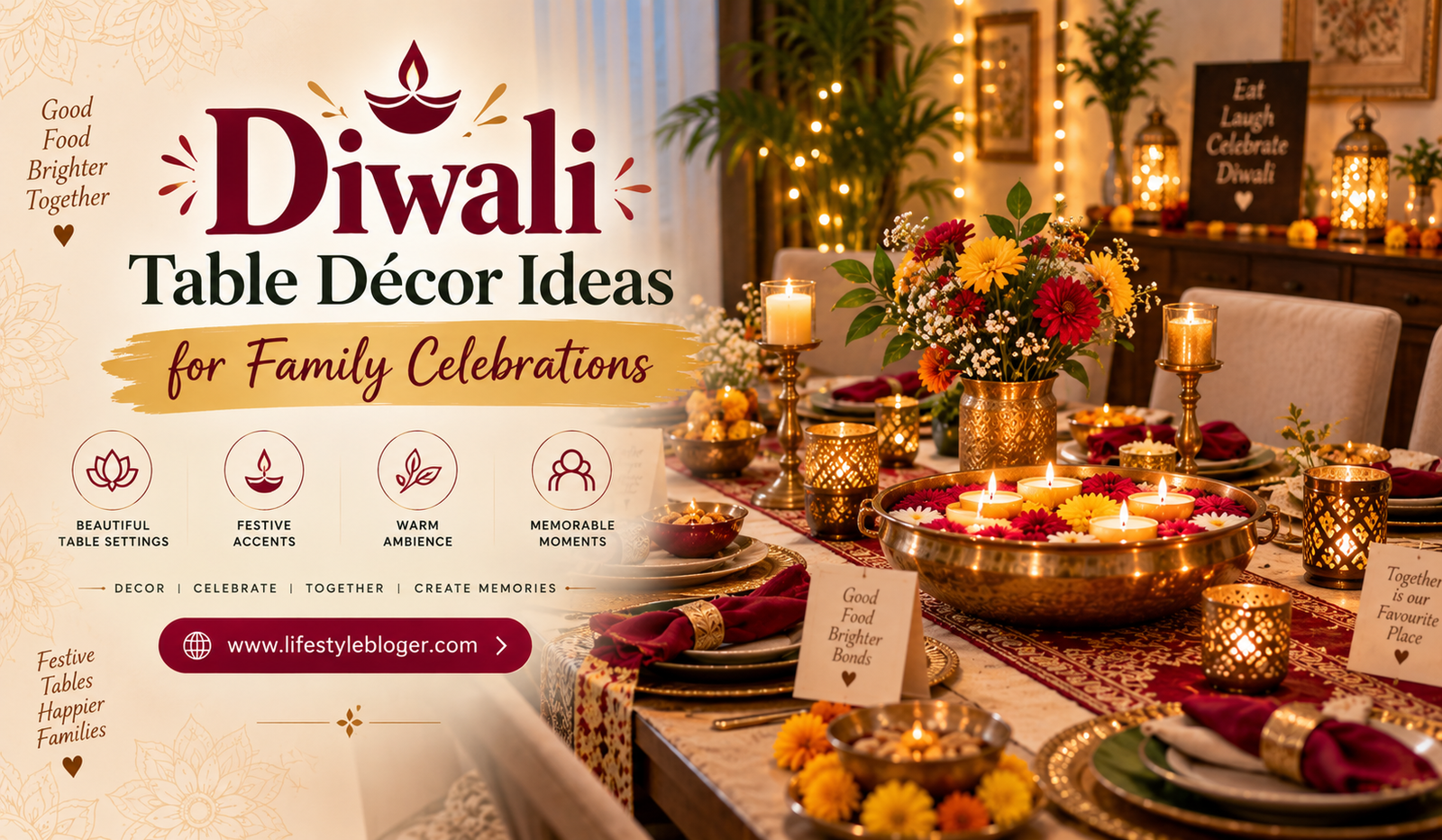
Diwali brings everyone together around the same table. Whether it is a family dinner, an evening of sweets and snacks, or a relaxed gathering after Lakshmi Puja, the dining or centre table often becomes one of the most-used spaces in the home during the festival.
Decorating the table for Diwali does not mean covering it with expensive accessories. A few carefully chosen elements can create a festive setting while leaving enough room for food, serving dishes and conversations. The best table décor is attractive but still practical enough for a family gathering.
From traditional diyas and flowers to elegant table runners and homemade decorations, here are some Diwali table décor ideas for family celebrations that can work in both modern apartments and traditional Indian homes.
Start With a Simple Table Base
Before adding decorations, decide what you want the overall table to look like.
A plain wooden table can provide a warm base for traditional decorations, while a glass or white table can work well with colourful flowers and metallic accents.
You can introduce a table runner instead of covering the entire table with a large cloth. A red, mustard, cream, green or gold runner can immediately create a festive foundation.
For a more understated appearance, choose a neutral runner and allow the diyas, flowers and tableware to provide the colour.
The important thing is to leave enough exposed table space. Diwali décor should enhance the table rather than hide it completely.
Create a Centrepiece With Diyas
Nothing says Diwali quite like the warm glow of diyas.
Instead of scattering individual diyas randomly, create a small arrangement in the centre of the table. Place several clay diyas on a decorative tray or arrange them in a circle around a flower bowl.
If your family has young children, you can use LED diyas on the dining table and keep real diyas in safer areas where they can be supervised.
For an elegant look, combine traditional clay diyas with a simple brass plate. The warm flame against the metallic surface can create a beautiful festive effect after sunset.
Bring Fresh Flowers to the Table
Flowers can make even a simple table arrangement feel special.
Marigolds are an obvious Diwali favourite, but you can also use roses, chrysanthemums, jasmine or other seasonal flowers depending on the look you want.
Instead of creating a large floral arrangement, try placing small flower clusters at different points along the table.
Another idea is to scatter a few petals around a central diya arrangement. This creates a festive border without taking up much space.
Fresh flowers also add natural colour without making the table look overly decorated.
Use a Decorative Urli Bowl
A traditional urli can become an attractive Diwali centrepiece.
Fill it with water and add flower petals or floating flowers. Place it in the centre of the table and surround it with a few small diyas.
For a dining table, keep the arrangement relatively low so that family members can see across the table comfortably.
A shallow urli works particularly well because it provides the traditional appearance without taking up too much vertical space.
Add a Festive Table Runner
A table runner is one of the easiest ways to change the appearance of a dining table without buying new furniture.
For a traditional Indian setting, look for fabrics with subtle embroidery, block prints, zari details or festive motifs.
If your table already has a strong design, choose a simpler runner. If the table is plain, a more decorative runner can become the main visual feature.
Gold detailing can work particularly well during Diwali, but you do not need metallic fabric everywhere. Sometimes a simple deep-coloured runner paired with warm lighting looks more sophisticated.
Make the Dinnerware Part of the Décor
You do not need special Diwali plates to make your dining table festive.
Your everyday dinnerware can look completely different when paired with attractive napkins, glasses and serving bowls.
Try using cloth napkins in colours that match your table runner. Fold them simply and place them beside each plate.
If you have traditional brass or copper serving pieces, bring a few of them out for the occasion. Mixing traditional metalware with modern plates can create an interesting Indian festive setting.
The goal is coordination rather than perfection.
Create a Small Sweets Display
Diwali celebrations naturally involve sweets, so why not make them part of the table decoration?
Arrange ladoos, barfi, kaju katli or other festive treats on a decorative platter and place it at one end of the table.
A tiered stand can be useful if you have limited table space. It allows you to display sweets vertically rather than spreading several plates across the table.
You can also use small bowls for dry fruits, chocolates or savoury snacks.
Just make sure the display remains accessible. Décor should never make guests hesitant to reach for the food.
Add Small Lanterns for Evening Gatherings
If you are hosting a family dinner after sunset, small lanterns can add another layer of warm lighting.
Place one or two lanterns at the ends of the table rather than filling the entire centre with them.
LED lanterns are particularly practical for a dining table because they provide the decorative appearance of traditional lantern lighting without an open flame.
For a smaller table, miniature lanterns can create a festive atmosphere without taking up too much room.
Try a Rangoli-Inspired Table Design
You do not have to create a full rangoli on the dining table. Instead, borrow elements from traditional rangoli patterns.
For example, use a decorative round mat or tray as the centre of the table and arrange flowers, diyas and small bowls around it.
You could also use a reusable rangoli-style table decoration underneath a centrepiece.
This brings the traditional visual language of Diwali into the dining area without putting loose coloured powder directly on the table.
Use Natural Materials for a Warm Look
If you prefer a less flashy style, natural materials can make the table feel festive without looking excessive.
Wooden trays, terracotta diyas, cotton runners, woven placemats and fresh flowers can work beautifully together.
This style is especially suitable for homes with neutral interiors. The natural textures introduce warmth while allowing the existing furniture to remain visible.
A simple wooden tray containing flowers and diyas can sometimes look more inviting than a table covered with glittering accessories.
Add Personal Family Details
Family celebrations are what make Diwali special, so include something personal in the décor.
You could place a small family photograph near the centrepiece, use handmade decorations created by children or bring out a traditional diya that has been part of your family celebrations for years.
If children are involved, let them create small paper decorations or name cards for the dinner table.
These details do not have to be perfectly made. Their personal connection is what makes them meaningful.
Keep the Table Comfortable for Everyone
A beautiful table is not useful if there is no room to eat.
This is particularly important during Diwali because family meals may involve several dishes, serving bowls, glasses and sweets.
Keep the centrepiece low enough that people can see one another. Avoid placing large decorations directly in front of seats.
Leave enough space around each plate and make sure hot serving dishes have a safe place.
If the table is small, use the centrepiece only until dinner begins. You can move decorative items to a side table once the food is served.
Choose One Colour Story
A simple colour theme can make different decorations feel like part of one arrangement.
You could combine:
- Gold with cream for an elegant look
- Orange with yellow for a traditional festive mood
- Red with gold for a richer appearance
- Green with brass for a classic Indian setting
- White with warm gold for a modern look
You do not need every item to match exactly. Repeating two or three colours across the runner, flowers, napkins and decorations is enough to create visual consistency.
Create a Separate Snack or Tea Corner
If your family usually spends several hours together during Diwali, consider moving some refreshments away from the main dining table.
A small side table can hold tea, coffee, water, sweets and snacks. This keeps the dining table free for the main meal while giving you another opportunity to decorate.
A few flowers and a small lamp can turn this practical refreshment station into another festive corner.
Don’t Overdecorate the Table
The easiest mistake with Diwali table décor is adding too much.
When there are too many candles, flowers, bowls, figurines and decorative pieces, the table can quickly become difficult to use.
Choose one main feature and build around it.
For example, a low floral arrangement can be the centrepiece, with four or six diyas around it. Add a runner and coordinated napkins, and the table may already feel complete.
Simple arrangements often look better because they allow the individual details to stand out.
Final Thoughts
Your Diwali table should feel like a part of the celebration, not a display that nobody is allowed to touch.
Use diyas, flowers, traditional metalware, table runners, lanterns, festive dinnerware and sweets to create a setting that feels warm and welcoming. At the same time, leave enough room for plates, serving dishes and the people who will gather around the table.
You can keep the décor traditional with marigolds, clay diyas and brass pieces, or give it a contemporary appearance with neutral colours, subtle lighting and simple tableware.
Most importantly, add something personal. A handmade decoration, a family heirloom or even a small arrangement created together with the children can make the table more meaningful.
After all, the real beauty of a Diwali table is not how perfectly it is decorated. It is the laughter, food, conversations and memories created around it.