A Diwali home feels different when the first diya is lit. The small flame may not take up much space, but it can instantly change the atmosphere of an entrance, pooja corner, balcony or living room. For many Indian families, diyas are more than decorative objects. They are closely connected with the feeling and traditions of the festival.
Today, decorative diyas are available in many forms. You can find simple unpainted clay lamps, colourful ceramic pieces, brass diyas, lotus-shaped designs, floral lamps and even handcrafted options decorated with mirrors or traditional motifs.
With so many choices, it can be difficult to decide which ones will suit your home. The best option depends on the type of décor you already have and where you plan to place the lamps.
Here are some of the best decorative diyas for a traditional Diwali setup and ideas for using them around your home.
Traditional Clay Diyas for an Authentic Diwali Feel
If you want your decoration to feel genuinely traditional, start with simple clay diyas.
Their earthy appearance works beautifully with rangoli, marigold flowers, wooden décor and traditional Indian interiors. You can leave them in their natural terracotta finish or decorate them yourself with paint and small embellishments.
Clay diyas are especially suitable for creating rows along an entrance, arranging around a rangoli or decorating a balcony.
Their biggest visual advantage is simplicity. You do not need elaborate designs when dozens of small clay lamps are glowing together.
For a traditional arrangement, keep the diya shapes similar and arrange them with fairly even spacing. The repeated flames will create a stronger visual effect than a collection of unrelated decorative pieces.
Brass Diyas for a Rich Traditional Look
Brass is a natural choice if you want your Diwali setup to have a more elegant, classic appearance.
A brass diya can become a focal point in a pooja area, on a console table or beside a traditional entrance arrangement. The warm metallic surface looks particularly attractive when illuminated by a flame.
You can choose a simple single-wick brass lamp or a more elaborate design with multiple holders.
Brass also works well with other traditional materials. Pair it with wooden furniture, marigold flowers, red or yellow textiles and a simple rangoli for a classic Indian festive setting.
Rather than buying many large brass pieces, consider using one statement diya and surrounding it with smaller clay lamps.
Lotus-Shaped Diyas for a Festive Centrepiece
The lotus is one of the most recognisable decorative motifs in Indian festive design, making lotus-shaped diyas particularly suitable for Diwali.
These lamps can be used as centrepieces on a table, near a pooja arrangement or in the middle of a rangoli.
A single large lotus diya can serve as the main feature, while smaller lamps can be arranged around it.
If you are using a highly detailed rangoli, a lotus diya can provide a natural focal point without requiring additional decoration in the centre.
Flower-Shaped Diya Sets
Flower-shaped diya sets are useful when you want something more decorative than a plain clay lamp.
These designs can feature several small sections for wicks, creating a broader spread of light. They can be placed on a decorative plate or directly beside a rangoli.
Flower-shaped lamps look particularly attractive when surrounded by real flower petals. Marigold, rose and other colourful petals can provide a natural frame around the lamp.
For a family gathering, a flower-shaped diya arrangement can also work well on a side table or dining area where you want a festive accent without occupying too much space.
Painted Clay Diyas for a Colourful Home
Plain clay does not have to be your only option.
Painted diyas can introduce colours that match your existing Diwali décor. Red, yellow, orange, green, blue and gold are common choices, but you can also select shades that complement your home’s interior.
If your living room already contains colourful cushions and fabrics, choose diya colours that repeat one or two of those shades.
For a more elegant setup, keep the painting simple. A single metallic border or small floral pattern can be enough.
You can also make painted diyas a family activity before Diwali. Children can decorate the outer surface while adults handle the oil, wick and lighting arrangements.
Mirror-Decorated Diyas for Extra Sparkle
If you want your diya arrangement to catch attention, look for lamps decorated with small mirrors or reflective embellishments.
These work especially well in the evening because the reflections from the flame add tiny points of brightness around the lamp.
Mirror-work diyas can be placed around a rangoli, on a festive tray or beside a doorway.
Since these lamps already contain plenty of visual detail, avoid surrounding them with too many glittery decorations. Simple flowers or plain clay lamps can provide a better balance.
Peacock-Motif Diyas for an Indian Decorative Touch
Peacock-inspired designs can add a distinctly Indian character to your Diwali arrangement.
You can find diya holders featuring peacock shapes, feather patterns or colourful detailing. These pieces work especially well in living rooms, entrance consoles and pooja corners.
A peacock-motif diya can be used as an accent rather than repeated throughout the entire home.
Place one or two decorative pieces alongside simpler lamps. This allows the detailed design to stand out without making the arrangement look crowded.
Terracotta Diyas for an Earthy Setup
Terracotta is a good choice if you prefer natural-looking décor.
The muted clay finish works beautifully with marigold flowers, jute accessories, wooden trays and earthy-coloured fabrics.
A terracotta arrangement can make a modern apartment feel warmer without introducing too much colour or metallic decoration.
Try arranging several terracotta lamps on a wooden tray and adding a few flower petals around them. The result is simple, traditional and easy to recreate.
Floating Diyas for a Decorative Bowl
Floating diyas can create a completely different appearance from lamps placed directly on a surface.
Fill a broad decorative bowl with water and add flower petals. Place suitable floating diyas carefully on the surface and light them when you are ready to enjoy the arrangement.
This can become an attractive centrepiece for a living room or dining area.
Because it involves an open flame and water, it should be placed somewhere stable and monitored throughout use. Keep it away from children, loose fabrics and areas where people could accidentally knock it over.
Decorative Diya Stands for a Pooja Corner
If you want a more permanent-looking festive arrangement, consider a diya stand.
Tall brass or metal stands can add height to a pooja corner or living-room entrance. They also help create layers when combined with smaller lamps placed on the floor.
A tall diya stand can become the main vertical feature while flowers and small clay lamps provide decoration around its base.
This type of setup is particularly useful when the rest of your décor is relatively simple.
Diya Plates and Multi-Lamp Arrangements
Instead of placing individual lamps around the house, you can create a dedicated diya plate.
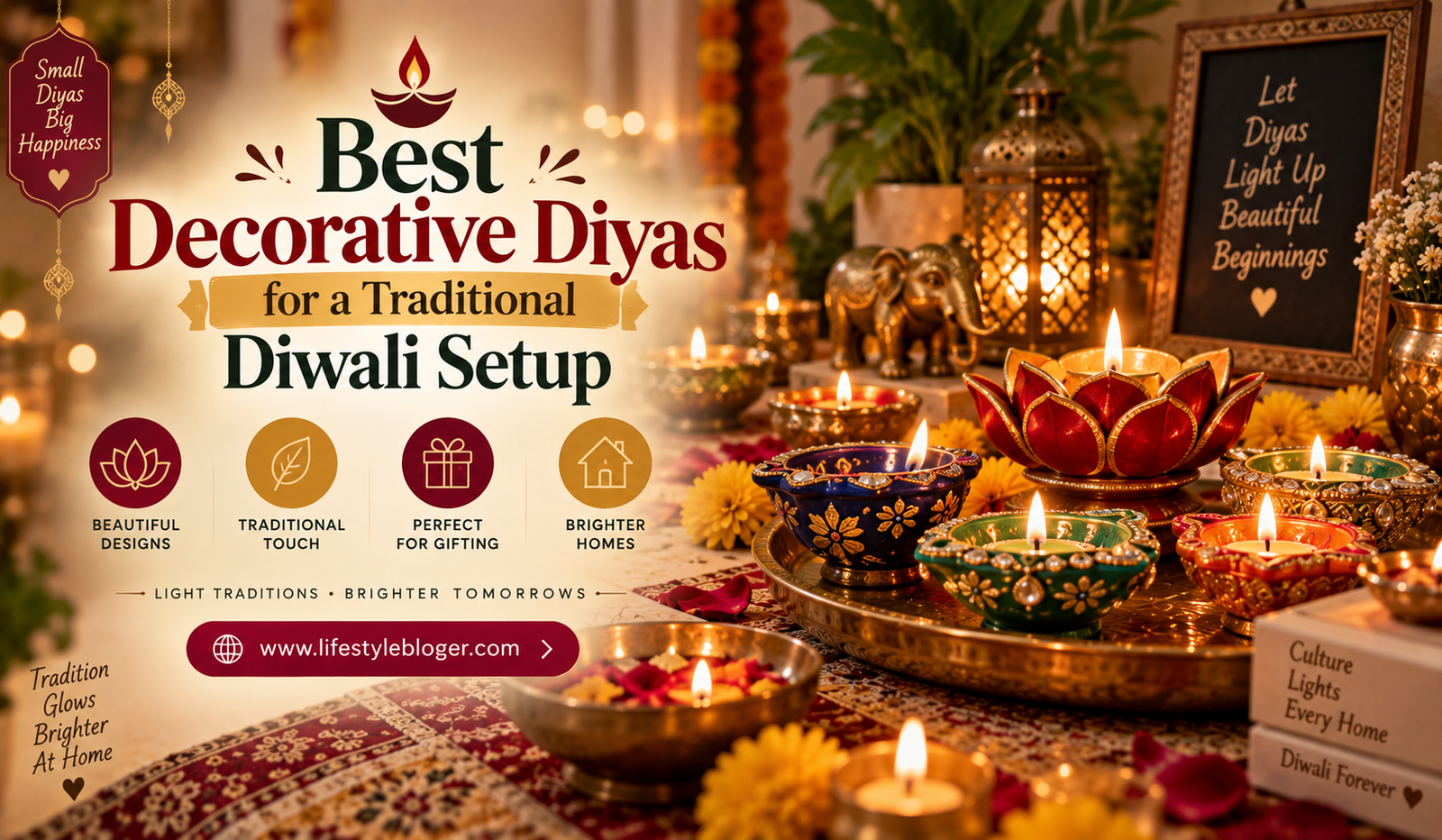
Use a decorative metal or brass plate as the base and arrange several small diyas on it. Add a few flower petals around the lamps, leaving enough space between them.
This makes it easier to move the entire arrangement when necessary.
A diya plate can be placed near the entrance, beside the pooja area or on a side table during family celebrations.
How to Choose the Right Diyas for Different Areas
Different parts of the home call for different diya styles.
For the entrance: Choose simple clay lamps, painted diyas or small decorative sets that can be arranged around a rangoli.
For the pooja area: Brass, traditional clay or multi-wick lamps can create a more devotional appearance.
For the living room: Lotus lamps, floral diyas, decorative brass pieces or a diya plate can work as attractive focal points.
For the dining table: Choose smaller, low-height lamps so guests can see across the table comfortably.
For balconies: Simple clay or terracotta lamps can work well, provided they are placed securely and protected from wind.
Combine Decorative and Simple Diyas
One of the easiest ways to create a sophisticated Diwali setup is to mix different levels of decoration.
You do not need every diya to be ornate.
For example, place one large decorative brass or lotus diya in the centre and surround it with several simple clay lamps. Add a few marigold petals around the arrangement.
The decorative lamp becomes the focal point, while the simpler lamps create the surrounding glow.
This approach is also more economical than purchasing an entire collection of expensive decorative diyas.
Keep Safety in Mind
Traditional diyas use an open flame, so placement matters as much as appearance.
Keep lamps away from curtains, paper decorations, loose fabric and dry flowers. Place them on stable, heat-resistant surfaces and avoid locations where people could accidentally knock them over.
If you have children or pets, use extra caution. LED diyas can replace real flames in areas where supervision is difficult.
Never leave burning diyas unattended, particularly overnight or in outdoor areas where wind can move the flame.
Final Thoughts
Decorative diyas can give a Diwali home its traditional character without requiring an elaborate makeover.
Clay diyas provide the timeless foundation, while brass lamps, lotus designs, painted diyas, terracotta pieces, floral shapes and decorative diya stands allow you to create a more personalised arrangement.
You do not need to use every style together. Choose one main diya design for each area and complement it with simpler lamps, flowers or rangoli.
For a traditional Indian setup, the most beautiful arrangements are often the ones that do not try too hard. A row of handmade clay lamps at the entrance, a brass diya in the pooja corner and a few flower petals around a warm flame can create more festive charm than an overcrowded collection of decorations.
This Diwali, let the diya remain the centre of your decoration. Its small flame is enough to bring warmth, tradition and a sense of celebration into the home.