
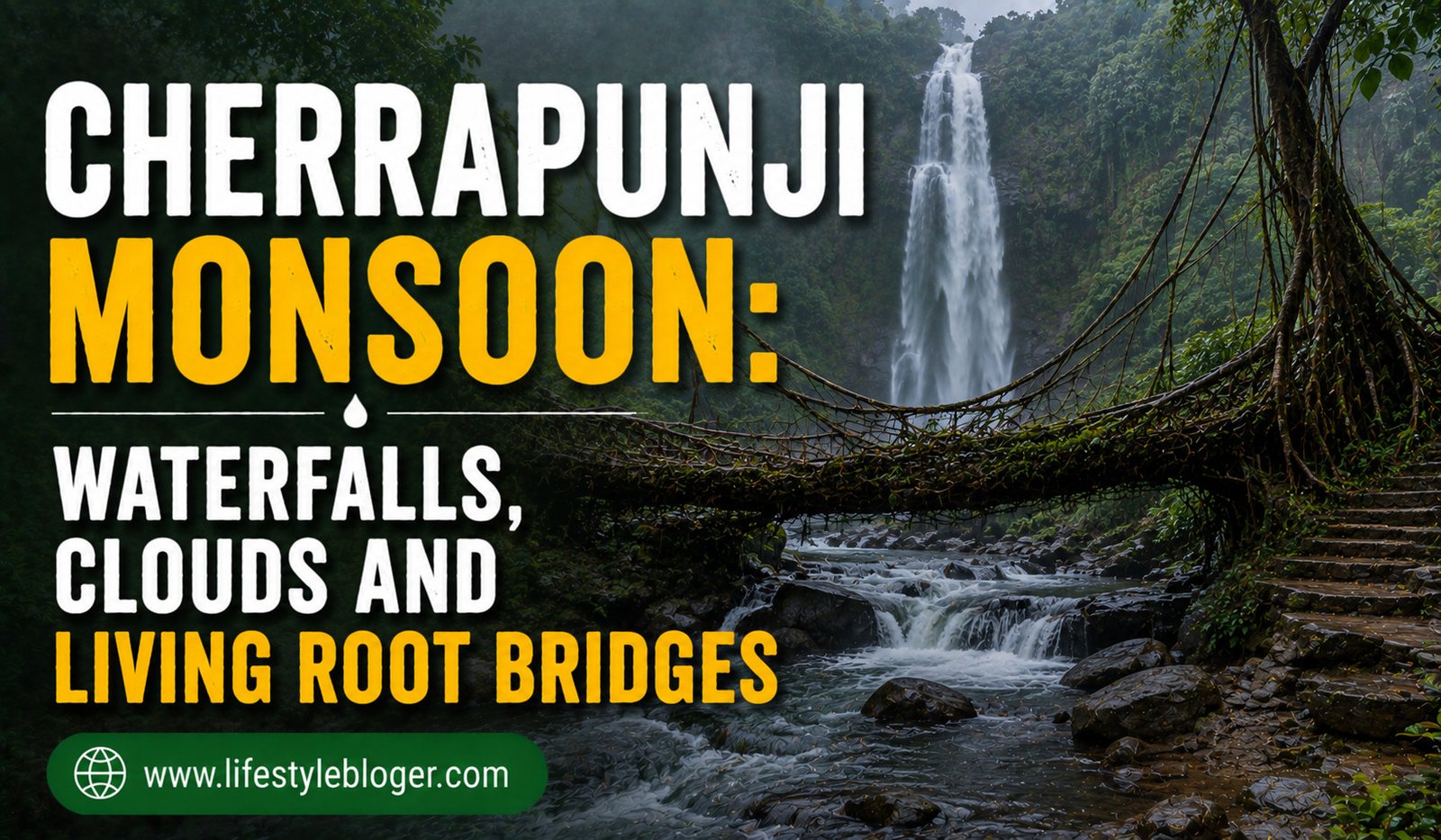
Cherrapunji, traditionally known as Sohra, is one of the most fascinating destinations in Meghalaya, especially during the monsoon. Famous for extraordinary rainfall, dramatic cliffs, dense greenery and spectacular waterfalls, the region takes on a completely different character when the rainy season arrives.
During the monsoon, clouds roll across the Khasi Hills, streams swell and waterfalls rush down rocky slopes. Forest trails become greener, while the famous living root bridges demonstrate how local communities have worked with nature for generations.
A trip to Cherrapunji during the rainy season is not simply about seeing waterfalls. It is an opportunity to experience misty landscapes, traditional villages, forest paths and some of the most remarkable natural scenery in Northeast India.
Rain can be intense, so travelling here requires preparation and patience. Yet for those who enjoy dramatic landscapes and nature, the monsoon can be one of the most rewarding times to visit.
Why Cherrapunji Is Magical During the Monsoon
Cherrapunji’s identity is closely connected with rain. Unlike destinations where monsoon is treated as a temporary interruption, rainfall is part of the region’s landscape and culture.
The hills become intensely green, streams flow through valleys and waterfalls appear across cliffs that may look much quieter during drier months. Clouds frequently move through the hills, sometimes reducing visibility and then suddenly revealing dramatic views.
The combination of rain and elevation creates an atmosphere that feels almost cinematic. Roads disappear into mist, houses sit among green slopes and waterfalls can often be heard before they are seen.
The monsoon also highlights the relationship between the Khasi people and their natural surroundings, particularly through the remarkable living root bridges found in the region.
Best Waterfalls to See in Cherrapunji
Nohkalikai Falls
Nohkalikai Falls is among the most famous attractions around Cherrapunji. The waterfall drops dramatically from a high cliff into a pool surrounded by greenery.
During the monsoon, increased rainfall can make the cascade particularly powerful. Clouds and mist around the surrounding hills add to the visual drama.
A viewpoint provides a safer way to appreciate the scale of the waterfall. Weather can change quickly, so visibility may vary throughout the day.
The best experience is to remain patient. A few minutes of waiting for the clouds to move can completely transform the view.
Seven Sisters Falls
Seven Sisters Falls is another iconic attraction of the Cherrapunji region. Multiple streams descend across the cliff face, creating the appearance of several waterfalls flowing together.
The monsoon is when the falls are most likely to display their full character. The surrounding cliffs become greener, while clouds often gather along the horizon.
On misty days, the waterfalls may appear and disappear behind clouds, making the landscape constantly changing.
Dainthlen Falls
Dainthlen Falls is located in a scenic setting surrounded by rocky terrain and greenery. The waterfall is associated with local folklore, adding a cultural dimension to the natural attraction.
During the rainy season, the increased water flow creates a strong cascade across the rocks.
It is an excellent place for travellers interested in combining natural scenery with local stories and traditions.
Wei Sawdong Falls
Wei Sawdong is known for its striking multi-level appearance and turquoise pools. The surrounding forest and rocky landscape make the waterfall particularly photogenic.
The route to the falls involves steps and uneven terrain, which can become slippery during rainfall. Good footwear and careful movement are essential.
Because conditions can change quickly, visitors should follow local guidance regarding access.
Cherrapunji Waterfalls at a Glance
| Waterfall | Best For | Monsoon Highlight |
| Nohkalikai Falls | Viewpoints and photography | Powerful cascade |
| Seven Sisters Falls | Panoramic scenery | Multiple streams |
| Dainthlen Falls | Nature and folklore | Increased water flow |
| Wei Sawdong Falls | Adventure and photography | Multi-level cascades |
Living Root Bridges: Nature Meets Tradition
What Are Living Root Bridges?
One of the most extraordinary features of Meghalaya is its living root bridges. Instead of being built entirely from conventional materials, these bridges are gradually shaped from the aerial roots of rubber fig trees.
Local communities have guided and trained the roots over many years so that they grow into strong natural structures capable of supporting people.
The result is a bridge that is not simply constructed and completed. It continues to grow and strengthen over time.
This remarkable tradition demonstrates a deep understanding of the local environment. Rather than fighting the wet terrain, communities developed a solution that works with the landscape.
Nongriat and the Double-Decker Root Bridge
The village of Nongriat is famous for its double-decker living root bridge. Reaching it requires a substantial trek involving numerous steps through forested terrain.
The journey can be challenging, particularly during the monsoon. Rain makes the steps slippery, while humidity can make the climb physically demanding.
However, the experience is about more than the bridge itself. The trail passes through lush forest, streams and small waterfalls, creating an immersive nature adventure.
Travellers should begin early, carry enough water and allow plenty of time for the return journey.
Cherrapunji Beyond Waterfalls
Although waterfalls and root bridges are the major attractions, the wider Cherrapunji region offers many other experiences.
Explore Misty Mountain Roads
Road trips around Sohra can be incredibly scenic during the monsoon. Hills, cliffs and villages appear and disappear behind passing clouds.
Instead of rushing between attractions, stop at safe viewpoints when the weather allows and enjoy the changing landscape.
Discover Khasi Culture
The Khasi culture is an important part of the region’s identity. Visitors can experience local food, village life and traditional practices while travelling through the hills.
Approach communities respectfully and ask permission before photographing people or private spaces.
Visit Caves and Natural Formations
The region around Meghalaya is known for its limestone caves and dramatic geological formations. Some caves can be explored depending on weather and local access conditions.
During heavy rain, underground water levels can change, so always follow local safety instructions and avoid entering restricted cave sections.
The Magic of Clouds in Cherrapunji
Clouds are one of the defining features of a monsoon visit to Cherrapunji. They can move quickly through valleys and over cliffs, changing the appearance of the landscape within minutes.
One moment you may have a clear view of a waterfall, while shortly afterward the entire valley may be hidden behind white mist.
For photographers, this unpredictability can be an advantage. Instead of waiting for perfect blue skies, embrace the changing weather. Mist can create depth and atmosphere in photographs.
The key is to protect your equipment from moisture and avoid standing near exposed cliff edges during poor visibility.
Best Monsoon Experiences in Cherrapunji
A rainy-season trip is most rewarding when it combines nature, culture and relaxation.
Some memorable experiences include:
- Watching waterfalls from safe viewpoints.
- Trekking to a living root bridge.
- Driving through mist-covered Khasi Hills.
- Enjoying local food after a rainy day outdoors.
The best itinerary should not be overloaded. Give yourself enough time to appreciate the surroundings rather than treating every attraction as a quick stop.
What to Eat in Cherrapunji During the Rains
Cool and wet weather makes warm local food particularly enjoyable. Meghalaya’s cuisine has distinctive flavours and ingredients, with several traditional Khasi dishes worth trying.
Visitors can explore dishes such as:
- Jadoh, a traditional rice and meat preparation.
- Dohneiihong, a pork dish cooked with black sesame.
- Tungrymbai, prepared using fermented soybeans.
- Local momos and hot tea for a lighter option.
Try regional dishes at clean and reputable eateries, particularly during wet weather.
What to Pack for a Cherrapunji Monsoon Trip
Cherrapunji’s rain requires practical preparation. Even if the weather appears clear when you leave, conditions can change quickly in the hills.
Carry:
- A waterproof raincoat or poncho.
- Shoes with excellent grip.
- Quick-drying clothes and extra socks.
- Waterproof bags for phones and cameras.
- Drinking water and basic medicines.
For root-bridge treks, avoid carrying an unnecessarily heavy backpack. A lightweight, waterproof daypack is much easier to manage on wet trails.
Monsoon Safety Tips
The region’s dramatic terrain requires extra caution during heavy rainfall. Roads can become slippery, walking trails muddy and streams stronger than expected.
Keep these points in mind:
- Avoid standing close to waterfall edges.
- Never enter fast-flowing streams.
- Do not trek alone on unfamiliar trails.
- Follow local instructions regarding access.
- Start treks early enough to return before dark.
- Avoid exposed viewpoints during severe weather.
Good footwear is particularly important. Slippery stone steps can make even a moderate trail challenging.
How to Plan a Cherrapunji Monsoon Trip
A two- or three-day stay is useful for experiencing the region without rushing.
Day One: Waterfalls and Viewpoints
Start with major attractions such as Nohkalikai Falls and Seven Sisters Falls. Keep the afternoon flexible because visibility may change with rainfall.
Spend the evening relaxing in Sohra and enjoying local food.
Day Two: Root Bridge Adventure
Begin early for the trek towards Nongriat and the living root bridges. Allow plenty of time for both the descent and climb back.
The trail can be physically demanding, especially when wet, so do not try to rush the journey.
Day Three: Scenic Exploration
Use the final day for nearby waterfalls, caves, viewpoints or village experiences depending on weather conditions.
Keep the return journey comfortable and avoid scheduling too many distant attractions.
Frequently Asked Questions
1. Is Cherrapunji worth visiting during the monsoon?
Yes. The monsoon brings the region’s waterfalls, forests and hills to life. It is one of the best seasons for travellers who enjoy dramatic natural scenery.
2. Which waterfalls are best in Cherrapunji during the rainy season?
Nohkalikai Falls, Seven Sisters Falls, Dainthlen Falls and Wei Sawdong Falls are among the popular choices. Water flow and accessibility can vary depending on rainfall.
3. How difficult is the trek to the living root bridge?
The Nongriat trek involves a significant number of steps and can be physically demanding. Monsoon conditions make it more challenging because paths and stairs become slippery.
4. What should I carry for Cherrapunji during the monsoon?
Carry waterproof rainwear, sturdy footwear with good grip, extra clothes, waterproof protection for electronics, drinking water and basic medicines.
5. Is it safe to visit Cherrapunji during heavy rain?
It can be visited with appropriate precautions, but heavy rainfall may affect roads, trails and waterfalls. Always follow local advice and avoid outdoor activities when conditions become unsafe.
Final Thoughts
Cherrapunji during the monsoon is an unforgettable meeting of water, clouds, forests and culture. Waterfalls become powerful, valleys disappear beneath mist and the Khasi Hills turn into a vivid landscape of green.
The living root bridges add another dimension to the experience. They demonstrate how local communities have developed remarkable ways of adapting to the region’s wet environment rather than trying to overcome it.
From the dramatic Nohkalikai Falls to the challenging trail towards Nongriat, every part of a monsoon journey offers something different. The key is to travel slowly, respect local customs, prepare for heavy rain and prioritise safety around waterfalls and cliffs.
If you are willing to embrace wet roads, cloudy skies and muddy trails, Cherrapunji’s monsoon can provide a travel experience that feels both adventurous and deeply connected to nature.