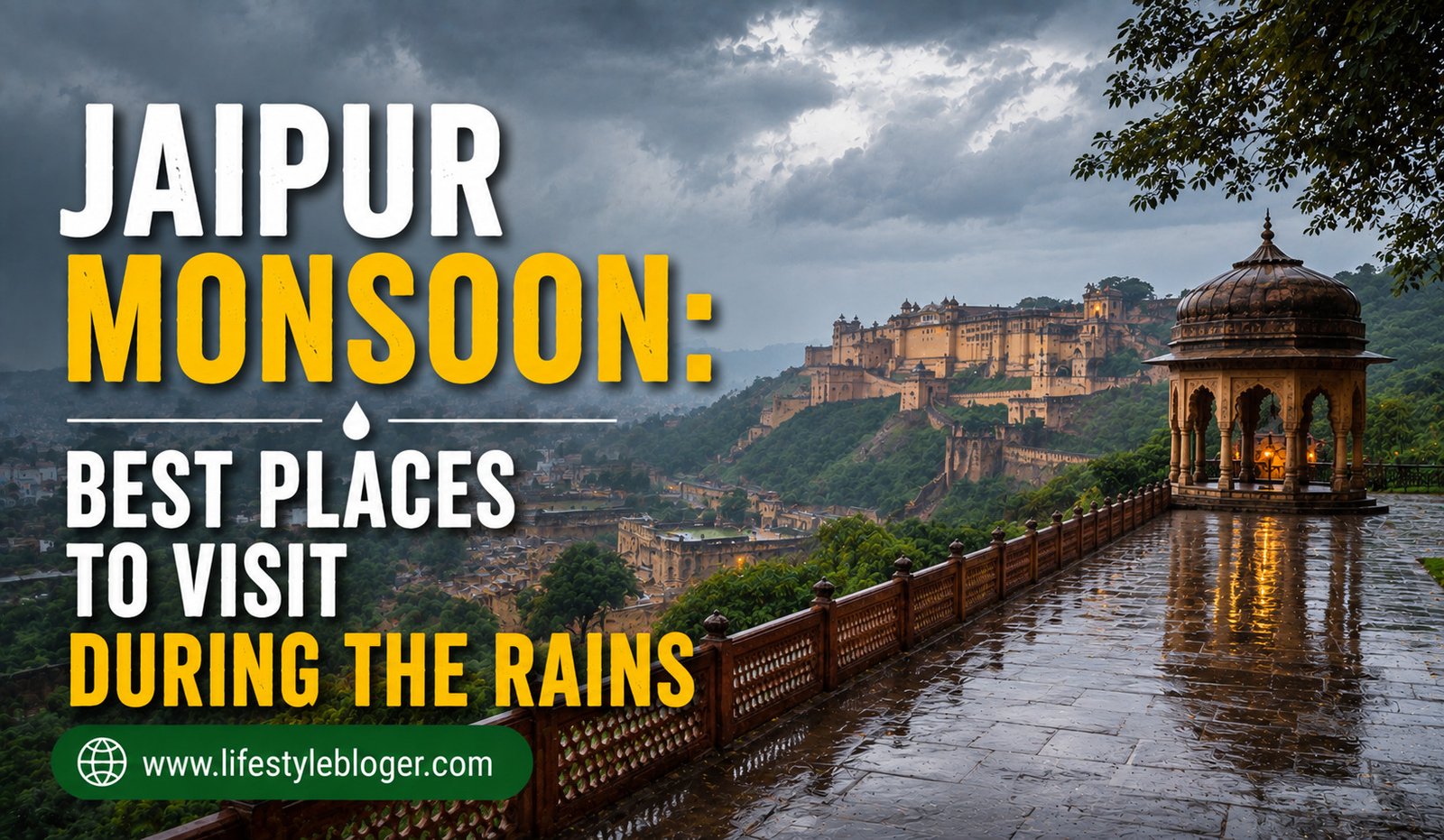
Jaipur, the Pink City of Rajasthan, is famous for its grand forts, colourful markets, historic palaces and rich culture. While summer can be extremely hot, the arrival of the monsoon brings a welcome change. The temperature becomes more comfortable, the skies turn dramatic and the landscape around the city takes on a fresher appearance.
The rainy season is a wonderful time to experience Jaipur from a different perspective. Heritage monuments look striking against cloudy skies, gardens become greener and the Aravalli hills surrounding the city gain a refreshing touch of colour. Occasional showers can also make sightseeing more pleasant, particularly during the morning and late afternoon.
For travellers planning a monsoon holiday, Jaipur offers a mix of history, architecture, nature, food and local experiences. You can spend a day exploring magnificent forts, enjoy a peaceful evening beside a lake or take a short drive into the surrounding hills.
Why Visit Jaipur During the Monsoon?
Jaipur’s monsoon season offers relief from the intense heat that characterises much of the year. Although rainfall can be irregular, showers can make the city noticeably cooler and more comfortable.
The rain also changes the appearance of Jaipur’s surroundings. The Aravalli landscape becomes greener, gardens look more vibrant and lakes can become particularly scenic. Historic buildings take on a dramatic appearance when framed by dark clouds.
Another advantage is the atmosphere. Rainy mornings can feel quieter, while evenings are perfect for enjoying local food and exploring markets when the weather is pleasant.
However, monsoon travel requires flexibility. Heavy showers may temporarily interrupt outdoor plans, and wet surfaces around forts and monuments can become slippery.
Best Places to Visit in Jaipur During the Rains
1. Amer Fort
Amer Fort is one of Jaipur’s most impressive landmarks and a must-visit during any trip to the city. Built into the hills, the fort combines grand courtyards, detailed architecture and panoramic views.
During the monsoon, the surrounding Aravalli hills become greener, creating a beautiful contrast with the fort’s warm-coloured walls. Cloudy skies can also make the landscape especially photogenic.
Take your time exploring the courtyards, gateways and palace sections rather than trying to see everything quickly. If rain begins, move carefully because stone floors and steps can become slippery.
2. Jal Mahal
Jal Mahal is particularly attractive during the rainy season. The palace appears to float in the middle of Man Sagar Lake, with the Aravalli hills forming a backdrop.
After rainfall, the surrounding landscape becomes greener and the lake can look especially striking beneath a cloudy sky. The area is ideal for photography and a relaxed stop during a city sightseeing tour.
Rather than treating Jal Mahal as a long sightseeing destination, consider visiting it around sunrise, sunset or during a comfortable evening drive.
3. Nahargarh Fort
Nahargarh Fort offers some of the most memorable views over Jaipur. Located on the Aravalli hills, the fort provides a different perspective of the city.
The monsoon can make the surrounding hills greener, while clouds add atmosphere to the views. On clear days after rain, the visibility can be excellent.
The road to the fort requires caution during wet weather. Drive slowly and avoid stopping at unsafe roadside locations.
4. Jaigarh Fort
Jaigarh Fort is another impressive hilltop attraction. Known for its massive defensive structures and historical significance, it offers panoramic views across the surrounding landscape.
The monsoon makes the hills around the fort more attractive, although rain can make exposed surfaces slippery. Comfortable footwear is recommended.
The fort can be combined with Amer Fort because both are located in the same general area, allowing travellers to explore two major attractions in one outing.
5. Albert Hall Museum
If rain becomes heavy, an indoor attraction such as Albert Hall Museum can be an excellent alternative. The historic building houses a wide range of collections and offers visitors an opportunity to explore Jaipur’s artistic and cultural heritage.
The museum is particularly useful as part of a flexible monsoon itinerary. Instead of cancelling your sightseeing because of rain, you can shift from outdoor attractions to indoor experiences.
The building itself is also an architectural highlight, making it worthwhile even for visitors who are not regular museum enthusiasts.
6. City Palace
City Palace provides an opportunity to experience Jaipur’s royal heritage in the heart of the city. The complex includes courtyards, ornate buildings and museum spaces.
A visit during the monsoon can be more comfortable than during the peak summer months. If showers occur, indoor sections provide shelter while still allowing you to continue exploring the complex.
The palace is also conveniently located near several markets and heritage attractions, making it easy to combine with other Old City experiences.
7. Galtaji
Galtaji is a historic temple complex located among the Aravalli hills. Its natural setting makes it particularly interesting during the rainy season.
Rain can bring additional greenery to the rocky surroundings, creating a peaceful atmosphere. Visitors should take care around wet stone surfaces and steps.
Because it is both a religious and cultural site, travellers should dress respectfully and follow local customs.
8. Sisodia Rani Garden
For a quieter monsoon experience, Sisodia Rani Garden is worth considering. The landscaped gardens, fountains and historic architecture create a pleasant environment away from the busiest parts of Jaipur.
Rain refreshes the greenery, making the garden particularly attractive for leisurely walks and photography.
It is a good place to include in an itinerary when you want a slower experience between visits to major forts and palaces.
Jaipur Monsoon Attractions at a Glance
| Place | Best For | Ideal Time | Monsoon Appeal |
| Amer Fort | History and architecture | Morning | Green Aravalli hills |
| Jal Mahal | Photography | Evening | Lake and cloudy skies |
| Nahargarh Fort | City views | Late afternoon | Misty hills |
| Jaigarh Fort | History | Morning | Fresh hill landscape |
| Albert Hall | Culture | Rainy hours | Indoor sightseeing |
| City Palace | Heritage | Morning | Comfortable exploration |
| Galtaji | Culture and nature | Morning | Green surroundings |
| Sisodia Rani Garden | Relaxation | Evening | Fresh greenery |
Enjoy Jaipur’s Heritage in Rainy Weather
One of the biggest advantages of visiting Jaipur during the monsoon is that you can combine outdoor and indoor experiences.
Explore the Old City
The streets of Jaipur’s Old City offer a lively mix of architecture, markets, handicrafts and food. After a light shower, the pink facades can look especially vibrant.
A walk through the markets can be combined with stops at local cafés or traditional food establishments. Carry compact rain protection because weather can change quickly.
Discover Local Architecture
Jaipur’s architecture is one of its biggest attractions. From ornate palace courtyards to imposing gateways, there are countless details to appreciate.
Rainy weather can create excellent conditions for photography, particularly when clouds soften the bright desert sunlight.
Monsoon Food to Try in Jaipur
Rainy weather creates the perfect excuse to explore Jaipur’s food culture. The city’s traditional cuisine includes hearty dishes and snacks that are particularly satisfying when the weather is cool.
You can sample local favourites such as:
- Pyaaz kachori.
- Mirchi vada.
- Dal baati churma.
- Hot masala chai.
Choose clean, reputable food spots, especially during periods of heavy rainfall.
Best Things to Do in Jaipur During the Monsoon
Enjoy Scenic Drives
A drive through the Aravalli hills can be one of the most enjoyable monsoon experiences around Jaipur. The landscape becomes greener and the cloudy skies create a dramatic setting.
Routes towards hill forts and nearby attractions are particularly scenic, but wet roads require careful driving.
Photograph Jaipur After Rain
The combination of colourful architecture, reflective streets, green hills and cloudy skies creates excellent opportunities for photography.
Early morning and late afternoon are often good times to explore, provided rainfall is manageable.
Spend Time in Gardens
Jaipur’s gardens become noticeably fresher after rainfall. A relaxed walk through Sisodia Rani Garden or another landscaped space can provide a peaceful break from sightseeing.
What to Carry for a Jaipur Monsoon Trip
The rainy season does not require heavy luggage, but a few practical items can make your visit more comfortable.
Carry:
- A compact umbrella or lightweight raincoat.
- Comfortable shoes with good grip.
- Extra clothing for unexpected showers.
- Waterproof protection for phones and cameras.
- Drinking water and basic medicines.
If you plan to spend time around hill forts, avoid footwear with smooth soles.
Monsoon Safety Tips for Jaipur Visitors
Although Jaipur generally remains accessible during the monsoon, heavy showers can make roads and monuments more challenging to navigate.
Keep a close eye on weather conditions if you are planning outdoor sightseeing. Avoid rushing between attractions during heavy rain.
Important precautions include:
- Walk carefully on wet fort steps and stone floors.
- Avoid standing close to unstable edges or steep slopes.
- Drive slowly on hill roads.
- Do not enter flooded areas.
- Keep some indoor attractions as backup options.
A flexible itinerary can make your trip much more enjoyable.
A Simple Monsoon Day in Jaipur
Start your day early with a visit to Amer Fort before the weather becomes unpredictable. Continue towards Jaigarh Fort if conditions are favourable.
After lunch, explore City Palace or Albert Hall Museum. If the skies clear, finish the day with a visit to Jal Mahal or a scenic drive around the city.
A simple schedule could look like this:
- Morning: Amer Fort and nearby attractions.
- Afternoon: Lunch followed by City Palace or Albert Hall.
- Evening: Jal Mahal and local food.
- Night: Explore markets or enjoy a relaxed dinner.
This approach provides variety without making the day feel rushed.
Frequently Asked Questions
1. Is Jaipur worth visiting during the monsoon?
Yes. The monsoon offers cooler weather, greener surroundings and dramatic skies that can make Jaipur’s forts, palaces and lakes particularly attractive.
2. Which is the best place to visit in Jaipur after rain?
Amer Fort, Jal Mahal and Nahargarh Fort are excellent choices after rainfall. The surrounding hills and water bodies become especially scenic during the rainy season.
3. Does it rain continuously in Jaipur during the monsoon?
No. Rainfall can vary considerably. Some days may have short showers while others can experience heavier rain. This makes flexible planning useful.
4. What should I wear while visiting Jaipur during the monsoon?
Choose lightweight, comfortable clothing and footwear with good grip. Carry a raincoat or umbrella and an extra set of clothes if you expect to spend significant time outdoors.
5. Can I visit Jaipur forts during heavy rain?
Forts may remain accessible depending on local conditions, but wet stone steps and floors can become slippery. If rainfall is severe, it is better to postpone outdoor sightseeing and visit indoor attractions instead.
Final Thoughts
Jaipur during the monsoon offers a refreshing contrast to its hot and dry image. Rain brings new life to the Aravalli hills, makes gardens greener and creates dramatic views around the city’s historic monuments.
Amer Fort and Nahargarh provide beautiful hill landscapes, Jal Mahal offers peaceful lakeside views, while City Palace and Albert Hall provide excellent alternatives when showers become heavy. Galtaji and Sisodia Rani Garden add cultural and natural experiences to the itinerary.
The key to enjoying Jaipur during the rains is to remain flexible. Carry suitable rain protection, wear comfortable footwear and avoid packing too many outdoor activities into a single day. Leave room for an unexpected café stop, a quiet garden walk or a dramatic view after the clouds clear.
With its combination of royal architecture, local cuisine, scenic hills and rainy-season charm, Jaipur can be an especially rewarding destination when the monsoon arrives.