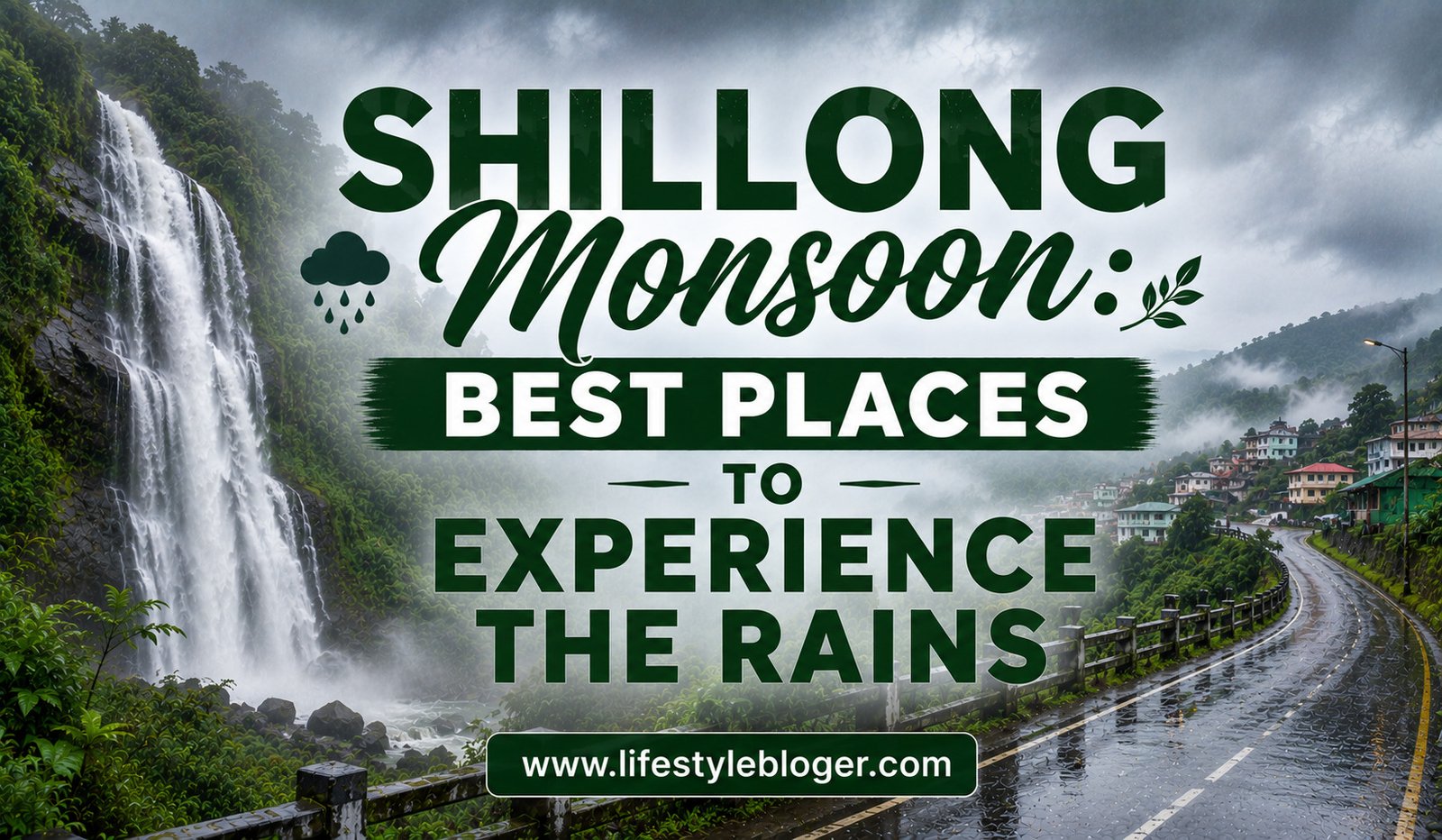
Shillong, often called the “Scotland of the East,” becomes particularly enchanting during the monsoon. Rain clouds settle over the Khasi Hills, waterfalls roar back to life, pine forests become greener and mist moves through the valleys. The rainy season gives Shillong a distinctive atmosphere that is difficult to experience at other times of the year.
For travellers who enjoy nature, photography, scenic drives and peaceful hill escapes, monsoon can be an excellent time to visit. The city and its surroundings offer far more than viewpoints. You can explore waterfalls, lakes, forests, caves and traditional villages while experiencing the dramatic beauty of Meghalaya’s rainy landscape.
Rainfall can be heavy, so a successful Shillong monsoon trip requires flexibility. Some roads and outdoor attractions may become difficult to access during intense showers. With sensible planning, however, the rain can become the highlight of the journey.
Why Shillong Is Special During the Monsoon
Shillong’s landscape is naturally suited to the rainy season. The city sits among rolling hills covered with vegetation, while numerous streams and waterfalls flow through the surrounding region.
As rainfall increases, the hills become intensely green. Mist often settles around the higher areas, creating changing views throughout the day. A clear morning can quickly turn cloudy, followed by a spell of rain and then another break of sunlight.
The monsoon also changes the soundscape. Instead of simply hearing traffic and city life, visitors can hear rainfall on leaves, water flowing through streams and waterfalls rushing down the hills.
This makes Shillong particularly appealing to travellers who prefer atmospheric experiences rather than conventional sightseeing.
Best Places to Experience the Shillong Monsoon
1. Elephant Falls
Elephant Falls is one of the most popular natural attractions near Shillong. The waterfall consists of multiple cascades surrounded by dense greenery.
During the monsoon, increased water flow makes the falls especially impressive. The sound of rushing water combines with the surrounding vegetation to create a refreshing atmosphere.
There are steps and viewing areas around the waterfall, but surfaces can become slippery after rain. Take your time and avoid rushing between viewpoints.
The attraction is convenient for visitors who want to experience a waterfall without undertaking a long trek.
2. Shillong Peak
Shillong Peak provides expansive views over the surrounding hills and city. On clear days, the elevated viewpoint can offer impressive scenery.
During the monsoon, however, clouds and mist frequently become part of the experience. Instead of seeing a distant landscape, you may find yourself surrounded by moving clouds and cool mountain air.
Visibility can change quickly, so do not be disappointed if the view is temporarily hidden. Waiting for a break in the clouds can sometimes reveal a beautiful landscape.
3. Ward’s Lake
Located within Shillong, Ward’s Lake offers an easy way to enjoy greenery and water without travelling far from the city centre.
The landscaped surroundings become fresher during the rainy season, while cloudy weather creates a calm atmosphere around the lake.
It is a good option for a relaxed morning or afternoon when heavy rain makes longer excursions inconvenient.
4. Laitlum Canyons
Laitlum Canyons is one of the most dramatic viewpoints around Shillong. Rolling hills and deep valleys create a vast natural landscape that feels very different from the city.
The monsoon adds another layer to the scenery. Green hills, mist and passing clouds can make the valleys appear almost dreamlike.
Weather conditions are important here. Avoid approaching exposed areas during heavy rain or strong winds, and wear footwear suitable for muddy paths.
5. Sweet Falls
Sweet Falls is surrounded by forest and has a reputation for being one of Shillong’s striking natural attractions. The monsoon landscape makes the surrounding greenery particularly attractive.
However, the area can be slippery and requires caution. Visitors should remain in designated safe areas rather than approaching dangerous edges.
It is better to appreciate the waterfall from a secure viewpoint than to take unnecessary risks for photographs.
6. Umiam Lake
Umiam Lake is located north of Shillong and is one of the region’s most recognisable landscapes. The large reservoir is surrounded by hills and vegetation.
During the monsoon, the scenery becomes noticeably greener. Clouds reflected on the water can create beautiful photographic opportunities.
A drive towards Umiam can be particularly enjoyable when the weather is mild. Stop at safe viewpoints and take time to appreciate the changing scenery.
7. Mawphlang Sacred Forest
For travellers interested in forests and local traditions, Mawphlang offers an experience beyond conventional sightseeing.
The forest is known for its dense vegetation and cultural significance. During the monsoon, the environment becomes especially lush and atmospheric.
Exploring such areas should be done respectfully and with local guidance where appropriate. Avoid disturbing plants, wildlife or culturally important sites.
Shillong Monsoon Attractions at a Glance
| Destination | Best For | Monsoon Highlight |
| Elephant Falls | Waterfall experience | Strong water flow |
| Shillong Peak | Mountain views | Mist and clouds |
| Ward’s Lake | Relaxation | Fresh greenery |
| Laitlum Canyons | Landscapes | Green valleys and mist |
| Sweet Falls | Nature | Rain-fed surroundings |
| Umiam Lake | Scenic drives | Cloudy lake views |
| Mawphlang | Forests and culture | Lush vegetation |
The Magic of Shillong’s Waterfalls
Waterfalls are among the biggest reasons travellers visit Meghalaya during the rainy season. Shillong provides convenient access to several cascades, while destinations farther into Meghalaya offer even larger and more dramatic waterfalls.
Rain increases the flow of streams across the hills, transforming small cascades into powerful natural attractions.
The key is to understand that waterfalls can also become dangerous during heavy rain. Water levels may rise suddenly, and rocks become extremely slippery.
Keep these basic precautions in mind:
- Stay behind safety barriers where provided.
- Never enter fast-flowing water.
- Avoid climbing wet rocks.
- Follow local warnings and temporary closures.
Monsoon Drives Around Shillong
A road trip through the Khasi Hills can be one of the most memorable parts of a Shillong visit. Roads wind through pine forests, hills and villages, with occasional waterfalls appearing along the route.
The scenery changes constantly. One moment you may see a clear valley, and the next a cloud may cover the road and surrounding hills.
Drive carefully because rain can reduce visibility and make roads slippery. Avoid speeding, especially on bends and downhill sections.
If travelling outside Shillong, start early and allow extra time because rainfall can slow traffic.
Exploring Shillong’s Local Culture
Monsoon travel is not only about nature. Shillong’s cultural character is equally interesting.
The city has a strong connection with Khasi traditions, music and local food. Exploring markets and neighbourhoods can give visitors a better understanding of everyday life in the region.
A rainy afternoon can be a good time to explore local shopping areas, sample regional dishes or enjoy a warm drink at a café.
What to Eat During the Shillong Monsoon
Cool, rainy weather naturally creates an appetite for warm food. Shillong has plenty of options ranging from local Khasi dishes to familiar snacks and café favourites.
Some foods worth trying include:
- Jadoh, a traditional rice and meat preparation.
- Dohneiihong, a rich pork dish.
- Tungrymbai, a fermented soybean preparation.
- Hot momos and tea for a quick rainy-day snack.
Food preferences vary, so travellers can choose between traditional Khasi cuisine and more familiar options available throughout the city.
Best Things to Do in Shillong During the Rains
A monsoon trip becomes more enjoyable when you avoid overplanning. Instead of trying to visit every attraction, choose a few places and give yourself time to enjoy the surroundings.
Some rewarding experiences include:
- Photographing mist-covered hills.
- Visiting waterfalls after rainfall.
- Taking scenic drives through pine forests.
- Enjoying local food while watching the rain.
The weather can change quickly, so leave some unplanned time in your itinerary.
What to Pack for a Shillong Monsoon Trip
The combination of rain, cool weather and outdoor sightseeing means practical packing is important.
Carry:
- A waterproof jacket or raincoat.
- Comfortable waterproof or quick-drying footwear.
- Extra socks and clothes.
- Waterproof protection for electronics.
- A small backpack and reusable water bottle.
A lightweight umbrella can also be useful, although a raincoat is often more convenient during windy showers.
Monsoon Safety Tips
Shillong and the surrounding hills can receive heavy rainfall. Travellers should pay attention to local weather conditions before heading to waterfalls, viewpoints and rural areas.
Wet roads and mountain paths can become challenging, particularly during intense showers. Avoid travelling to remote locations when visibility is extremely poor.
Do not approach waterfall edges or enter streams simply for photographs. If local authorities or residents advise against visiting a particular location, follow their guidance.
A Three-Day Shillong Monsoon Itinerary
Day One: Shillong City
Start with Ward’s Lake and explore some of the city’s cultural and shopping areas. If weather conditions are comfortable, visit Shillong Peak later in the day.
Spend the evening enjoying local food and the relaxed atmosphere of the city.
Day Two: Waterfalls and Umiam
Visit Elephant Falls in the morning and continue towards Umiam Lake. If the weather remains stable, enjoy the scenic route and spend time around the lake.
Return to Shillong before dark, particularly if rainfall is heavy.
Day Three: Hills and Forests
Plan a trip towards Laitlum Canyons or Mawphlang depending on weather and road conditions. Keep the itinerary flexible and avoid rushing between distant locations.
If rain becomes intense, return to Shillong and spend the afternoon exploring cafés, markets or indoor attractions.
Frequently Asked Questions
1. Is Shillong worth visiting during the monsoon?
Yes. Shillong becomes greener and more atmospheric during the rainy season. Waterfalls become more active, while mist and clouds create beautiful hill landscapes.
2. Which places are best to visit in Shillong during the rains?
Elephant Falls, Umiam Lake, Shillong Peak, Laitlum Canyons and Mawphlang are popular options. The best choice depends on weather and road conditions.
3. Does it rain continuously in Shillong during the monsoon?
Rainfall can be frequent, but it does not necessarily rain continuously throughout the day. Breaks between showers are common, which makes a flexible itinerary useful.
4. What should I wear in Shillong during the monsoon?
Wear quick-drying clothes, comfortable footwear with good grip and a waterproof jacket or raincoat. Carry an extra pair of socks because wet feet can become uncomfortable during long outings.
5. Is it safe to visit waterfalls in Shillong during heavy rain?
Waterfalls can become dangerous during heavy rainfall because water flow increases and rocks become slippery. Stay in designated viewing areas and avoid entering the water or approaching unstable edges.
Final Thoughts
Shillong during the monsoon offers a refreshing combination of rain, greenery, waterfalls, mist and mountain scenery. The season gives the city a distinct personality, transforming familiar landscapes into something more dramatic and atmospheric.
From the cascading waters of Elephant Falls to the misty views at Shillong Peak and the green valleys of Laitlum, there are plenty of ways to experience the rainy season beyond simply watching the weather from indoors.
The secret to enjoying Shillong in the monsoon is to travel patiently. Keep your schedule flexible, check conditions before heading into the hills and allow the weather to shape your experience. A sudden shower, a road disappearing into mist or a waterfall roaring after rainfall can become the moments you remember most.
For travellers willing to embrace the rain, Shillong offers a beautiful hill-station escape where the monsoon is not merely a season—it is part of the destination’s character.