Empty corners are some of the most overlooked areas in a home. While they may seem too small or awkward for furniture, these unused spaces can become beautiful focal points with the right indoor plants. Greenery adds warmth, color, texture, and personality to a room while making an otherwise forgotten corner feel intentional.
Decorating corners with plants is also a practical way to refresh your home without making major changes to your furniture or layout. A tall plant can fill vertical space, a compact arrangement can brighten a narrow corner, and a hanging planter can turn an empty wall into a natural feature.
The best approach is to consider the size of the corner, available light, surrounding décor, and the type of plant you want to showcase. With a little creativity, almost any unused corner can become a stylish green retreat.
Why Plants Are Perfect for Empty Corners
Empty corners can sometimes make a room feel unfinished. Furniture naturally occupies the central areas of a room, leaving awkward spaces that can be difficult to decorate. Plants offer a flexible solution because they come in countless sizes and shapes.
A tall indoor plant can add height without taking up much floor space. Meanwhile, a collection of smaller plants can introduce layers and texture to a compact area. Plants also soften the hard lines created by walls, cabinets, tables, and other furniture.
Another benefit is their versatility. Unlike permanent fixtures, plants can be moved as they grow or whenever you want to change your décor. This makes them ideal for renters and homeowners who enjoy experimenting with different arrangements.
Creative Ideas for Decorating Empty Corners With Plants
1. Create a Tall Green Corner
One of the easiest ways to decorate an empty corner is with a tall indoor plant. Large plants immediately fill vertical space and can create a strong visual statement without requiring additional furniture.
Plants such as fiddle leaf figs, rubber plants, palms, and tall snake plants can work well in larger corners. Choose a decorative pot that complements your existing color scheme and allow enough space for the foliage to spread naturally.
A tall plant beside a sofa, cabinet, or window can also help connect different areas of a room visually.
2. Build a Multi-Level Plant Display
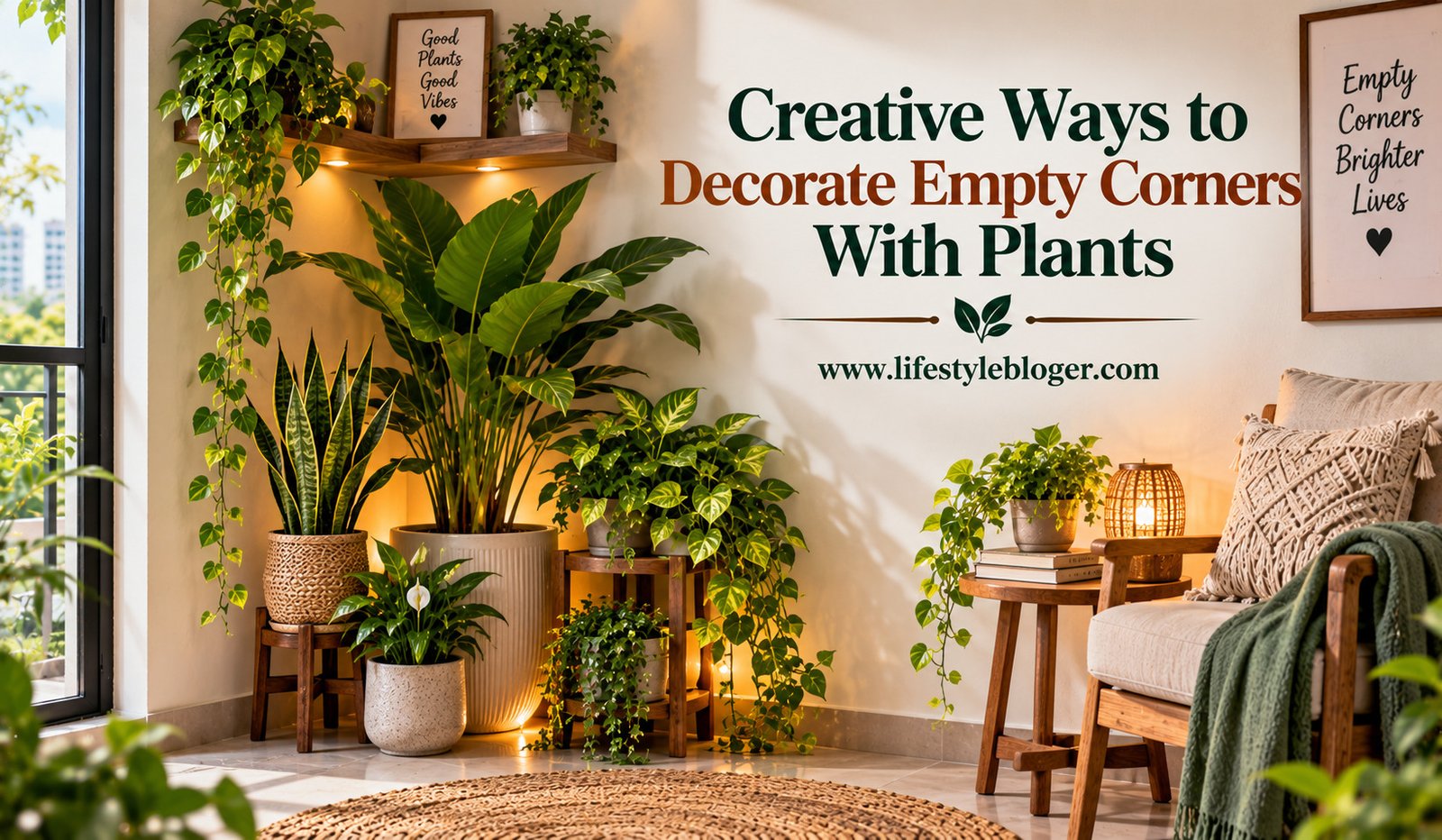
If you have a wider corner, consider creating a layered arrangement using plants of different heights. Instead of placing everything directly on the floor, combine a plant stand, small stool, and floor-level planter.
This creates a vertical composition that draws attention upward while making the corner feel more dynamic.
Use plants with different leaf shapes to create contrast. An upright plant can provide structure, while a trailing variety can soften the edges of the arrangement.
3. Use a Corner Plant Stand
A corner plant stand is an excellent solution for awkward spaces where traditional furniture may not fit. Triangular or tiered stands can make use of corners while keeping the main walking area open.
A stand with multiple levels allows you to display several smaller plants without spreading them across the room. This is particularly useful in apartments and compact bedrooms.
Choose a stand that matches the room’s overall style. Wood works well with natural interiors, while metal can complement contemporary or industrial décor.
4. Hang Plants From the Ceiling
Not every plant display needs to occupy the floor. Hanging planters can transform an empty corner by introducing greenery from above.
A trailing pothos, spider plant, or heartleaf philodendron can look beautiful suspended near a window or in a corner beside a reading chair.
Hanging plants are particularly useful in small homes because they add greenery without taking up valuable floor or table space.
Make sure the hanging hardware is securely installed and that the planter does not interfere with doors, windows, or walking paths.
5. Turn a Corner Into a Mini Indoor Garden
For plant enthusiasts, an empty corner can become a dedicated indoor garden. Instead of using a single plant, combine several varieties with different heights, textures, and colors.
Start with one larger plant as the anchor and add smaller plants around it. Use decorative pots with complementary finishes to keep the collection visually connected.
A corner garden can become especially attractive near a bright window where plants can receive suitable natural light.
6. Add a Small Plant Bench
A narrow bench can provide both a decorative surface and a platform for plants. Place several small pots across the bench while leaving some open space to prevent the arrangement from looking crowded.
This idea works particularly well in entryways, bedrooms, and living-room corners.
Choose a wooden bench for a warm appearance or a simple metal design for a more contemporary room.
7. Use a Large Basket With a Plant
Decorative baskets can make large plants feel more integrated into a room. A woven basket placed around a simple nursery pot can add texture while concealing an ordinary container.
This approach works especially well with palms, rubber plants, monsteras, and other plants with substantial foliage.
Natural basket materials pair beautifully with neutral walls, wooden furniture, linen fabrics, and earthy color palettes.
Choosing Plants Based on Corner Size
Not every corner needs a large plant. Choosing a plant that matches the available space helps maintain visual balance.
| Corner Type | Suitable Plants | Recommended Display |
| Narrow corner | Snake plant, ZZ plant | Slim floor pot |
| Bright corner | Fiddle leaf fig, rubber plant | Large decorative planter |
| Small corner | Peperomia, pothos | Small stand |
| Wide corner | Monstera, palm | Floor planter |
| High corner | Pothos, philodendron | Hanging planter |
| Darker corner | ZZ plant, snake plant | Compact floor display |
How to Make Corner Plant Arrangements Look Stylish
Combine Different Heights
Using plants at one height can make an arrangement look flat. Instead, combine tall, medium, and low plants to create depth.
For example, place a tall plant toward the back, a medium plant on a stand, and a small pot near the front. This creates a natural layered appearance without requiring many decorative accessories.
Coordinate Pots and Planters
The planter is an important part of the overall design. Even a beautiful plant can look out of place if its pot clashes with the surrounding décor.
Consider repeating materials or colors already present in the room. Ceramic pots can create a polished appearance, while terracotta and woven baskets offer a warmer, more natural feel.
You don’t need every pot to match exactly. Slight differences can make the display feel collected and personal.
Leave Some Empty Space
It may seem tempting to fill every part of an empty corner, but restraint often creates a more attractive result. Leaving breathing room around your plants allows the foliage to stand out.
A single large plant can sometimes make a stronger statement than a crowded collection of smaller pots.
Creative Corner Ideas for Different Rooms
Living Room Corners
Living rooms often have unused areas beside sofas, entertainment units, windows, or reading chairs. A large statement plant can transform one of these spaces into a natural focal point.
For a smaller living room, choose a narrow plant with upright growth. This adds greenery without making the room feel crowded.
Bedroom Corners
A bedroom corner can benefit from softer, more relaxed greenery. A tall plant in a woven basket or a small collection of plants on a wooden stand can create a calming atmosphere.
Keep the arrangement simple and avoid placing plants where they interfere with movement around the bed.
Entryway Corners
The entrance is an excellent place to make a strong first impression. A tall plant beside a console or a compact plant stand can instantly make the space feel more welcoming.
Choose a durable planter that is easy to clean because entryways generally experience more dust and foot traffic.
Home Office Corners
An unused office corner can become a refreshing green area. Place a medium-sized plant beside your desk or create a small vertical display with several compact varieties.
Greenery can also visually break up an otherwise furniture-heavy workspace.
Simple Tips for Maintaining Corner Plants
Plants placed in corners can sometimes receive less light than those positioned near windows. Before choosing a plant, consider how much natural light reaches the area throughout the day.
Keep these basic care practices in mind:
- Choose plants according to the available light.
- Check soil moisture before watering.
- Rotate plants periodically for balanced growth.
- Remove damaged leaves when necessary.
- Clean dusty foliage to maintain a fresh appearance.
Avoid watering plants on a strict schedule without checking their soil. Different varieties and room conditions can require different watering routines.
Mistakes to Avoid When Decorating Corners
One common mistake is choosing a plant that is too large for the corner. While oversized greenery can look impressive, it can also make a room feel smaller if the leaves extend too far into the walking area.
Another issue is poor lighting. A plant may look perfect in a particular location, but if it doesn’t receive suitable light, it may struggle over time.
Overcrowding is another mistake. Combining too many plants, stands, baskets, and decorative items can turn an attractive corner into a cluttered one. Choose a few elements and give each one enough space to make an impact.
Frequently Asked Questions
1. Which plants are best for empty corners?
Tall plants such as snake plants, rubber plants, palms, and monsteras work well in larger corners. For smaller spaces, pothos, ZZ plants, peperomia, and compact philodendrons are excellent choices.
2. How can I decorate a small corner with plants?
Use vertical solutions such as slim plant stands, wall-adjacent shelves, or hanging planters. These options provide greenery while taking up very little floor space.
3. How many plants should I put in one corner?
There is no fixed number. One large plant can be enough for a narrow corner, while a wider area may support three or four plants arranged at different heights. The goal is to maintain balance rather than fill every available space.
4. Can I decorate a dark corner with indoor plants?
Yes, but choose plants that can tolerate lower-light conditions. Snake plants and ZZ plants are popular options. Remember that low-light plants still need some usable light and should not be placed in complete darkness.
5. How do I make a plant corner look more modern?
Choose simple planters, clean-lined stands, and plants with distinctive shapes. Neutral-colored containers and a limited number of carefully positioned plants can create a sophisticated modern appearance.
Final Thoughts
Empty corners don’t have to remain unused or awkward. With the right plants and a little thoughtful styling, they can become some of the most attractive areas in your home.
Whether you choose a dramatic floor plant, a layered stand, a hanging planter, or a small collection of greenery, focus on matching the arrangement to the size and character of the room. Consider lighting, plant growth, planter materials, and available walking space before making your final choice.
The beauty of decorating with plants is that there is no single formula. You can keep the arrangement minimalist with one statement plant or create a lush corner garden filled with different textures and heights. With creativity and a little care, even an overlooked corner can become a fresh, stylish, and inviting part of your home.