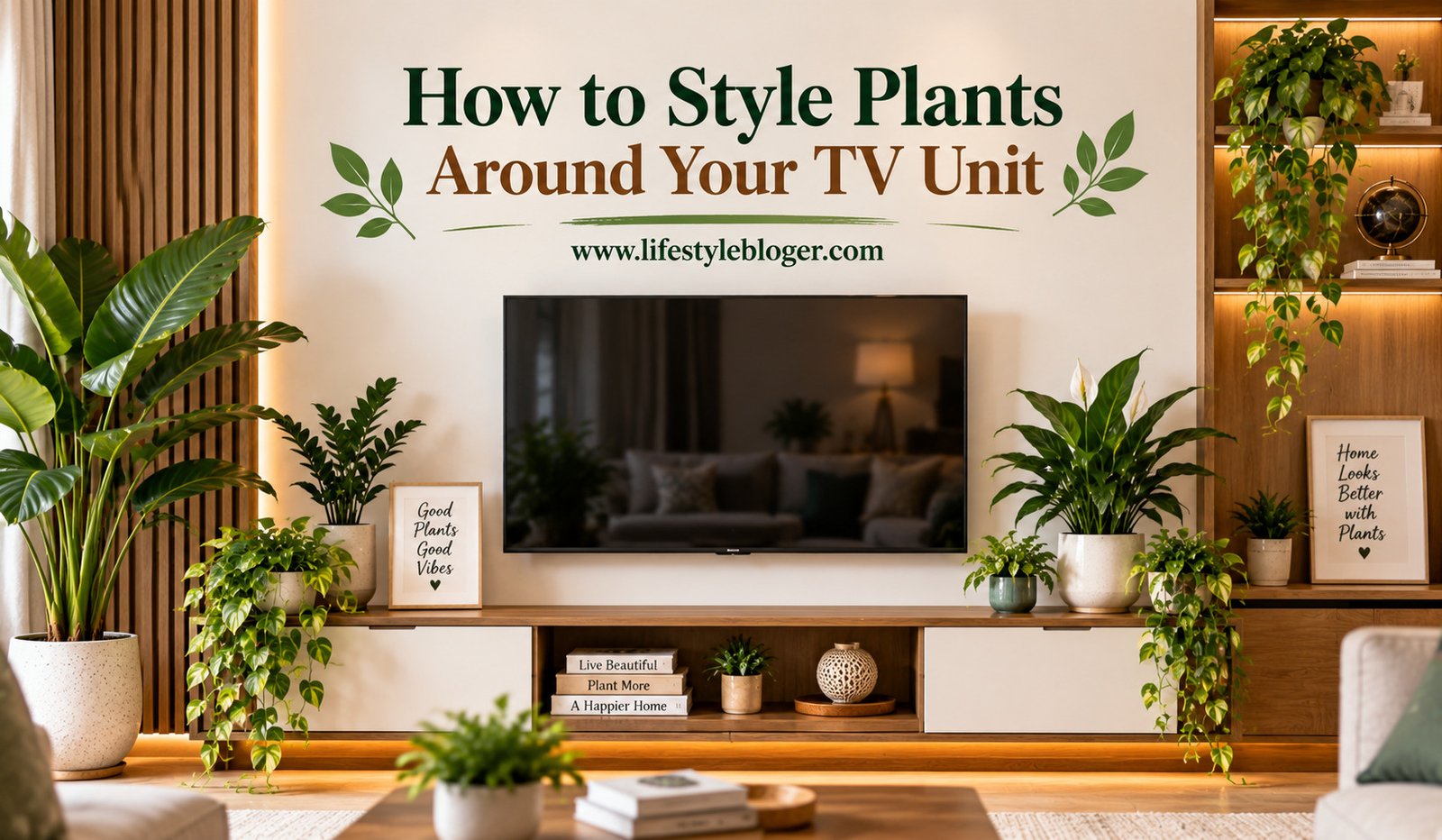
The TV unit is often one of the most noticeable areas in a living room. Because it naturally attracts attention, the way you decorate the space around it can influence the entire look and feel of the room. While artwork, books, lighting, and decorative objects are common choices, indoor plants offer a simple way to make a TV area feel warmer, fresher, and more inviting.
Plants can soften the hard lines of a television, cabinet, and entertainment console while adding natural color and texture. However, styling plants around a TV unit requires some balance. Too many plants can make the area look crowded, while too few may fail to create the desired visual impact.
The goal is to create a display where the greenery complements the TV unit instead of competing with the screen. With the right plant sizes, planters, heights, and placement, you can turn your entertainment area into a stylish focal point.
Why Plants Work Well Around a TV Unit
Televisions and entertainment furniture often feature straight lines, smooth surfaces, and dark screens. Plants introduce softer shapes and organic textures that help balance these elements.
Green foliage can also add contrast to neutral walls and furniture. A tall plant beside a low TV cabinet, for example, creates height variation and prevents the entertainment area from appearing visually flat.
Plants are especially useful in contemporary and minimalist homes because they provide natural decoration without requiring excessive accessories. One or two carefully positioned plants can often have more impact than a crowded collection of decorative objects.
Choose Plants Based on Your TV Unit Design
Before buying plants, consider the size, color, and structure of your TV unit. A large entertainment wall can support taller plants, while a compact media console usually looks better with smaller varieties.
The plant should complement the furniture rather than hide important features. If the TV unit already contains open shelves, storage compartments, and decorative pieces, use plants selectively to maintain visual balance.
For Modern TV Units
Modern TV units often feature clean lines, neutral colors, and simple finishes. Plants with architectural shapes work particularly well with this style.
Snake plants, ZZ plants, and rubber plants can complement contemporary furniture while adding a natural element. Use simple ceramic, concrete, or matte-finish planters for a cohesive appearance.
For Wooden TV Units
Wooden TV cabinets already introduce warmth and natural texture. Plants can reinforce this character without requiring many additional accessories.
Choose greenery with different shades of green and pair it with neutral or earthy planters. The combination of wood, plants, and soft lighting can create a comfortable and welcoming entertainment area.
For Minimalist TV Units
Minimalist furniture benefits from restrained plant styling. Instead of placing several small pots across the cabinet, select one distinctive plant and allow it to become a subtle focal point.
A tall plant positioned beside the unit or a small plant placed at one end of the console can provide enough greenery while preserving the clean appearance.
Use Height to Create Visual Balance
Height is one of the most important elements when styling plants around a TV unit. Since the television itself is usually positioned at eye level, adding plants at different heights can make the surrounding wall feel more balanced.
A tall floor plant placed beside the TV unit can extend the visual line upward, while a smaller plant on the cabinet can create a lower layer.
Avoid placing tall plants directly in front of the television. The foliage can obstruct the screen and make the entertainment area feel cluttered.
Best Plants to Style Around a TV Unit
Different plant varieties create different visual effects. Consider both their appearance and the amount of space available.
Some popular options include:
- Snake plants for tall, upright foliage.
- Pothos for soft, trailing greenery.
- ZZ plants for compact, glossy leaves.
- Rubber plants for bold and dramatic foliage.
- Peace lilies for a softer, elegant appearance.
- Spider plants for smaller shelves and cabinets.
The best choice will depend on your room’s available light and the amount of care you can provide.
Create a Balanced Arrangement
Symmetry can make a TV unit look organized, but perfect symmetry is not always necessary. An asymmetrical arrangement can feel more relaxed and contemporary.
For example, place a tall plant on one side of the TV unit and balance it with a smaller plant and decorative object on the opposite side. This creates visual equilibrium without making the arrangement look overly formal.
| TV Unit Style | Plant Placement | Suitable Plant |
| Compact console | One small plant on the side | ZZ Plant |
| Long media cabinet | Plants at both ends | Snake Plant and Pothos |
| Floating TV unit | Floor plant below or beside | Rubber Plant |
| Open shelving | Small plants between décor | Spider Plant |
| Large entertainment wall | Tall plant beside unit | Areca Palm or Snake Plant |
The key is to keep the center area around the screen relatively clear.
Style Plants on the TV Cabinet
The surface of a TV cabinet can be an excellent place for small plants, but it is important not to overfill it. The television should remain the main focus.
Choose one or two compact plants and combine them with only a few decorative elements. A small plant beside a stack of books or a simple decorative object can create a polished arrangement.
Plants with compact growth are particularly useful because they provide greenery without spreading across the cabinet surface.
Try the Rule of Three
Arranging decorative elements in groups of three can create a natural sense of balance. For example, you could combine a small plant, a decorative object, and a stack of books.
The objects do not need to be identical. Varying their heights and textures can make the arrangement feel more interesting while still appearing organized.
Place a Tall Plant Beside the TV Unit
A tall indoor plant is one of the easiest ways to frame an entertainment area. Positioning it beside the TV cabinet can soften the edge of the furniture and add height to the room.
A rubber plant, snake plant, or tall palm can work well depending on the available space. Use a planter that complements the color of the TV unit rather than introducing an unrelated decorative style.
Make sure the plant does not block speakers, cables, remotes, or access to storage compartments.
Use Hanging Plants Carefully
Hanging plants can add vertical interest around a TV area, especially when the wall feels too plain. A trailing pothos can create a relaxed appearance when positioned to one side of the entertainment unit.
However, hanging plants should be used carefully. Avoid placing them directly above the television where falling leaves or water could become a problem. They should also be positioned so that the vines do not interfere with the screen.
One carefully placed hanging plant is usually enough to create the desired effect.
Match Your Planters With the Room
Planters should be treated as part of the overall décor. Even a healthy, attractive plant can look disconnected if its container clashes with the furniture.
Neutral ceramic planters are versatile and work especially well with modern interiors. Terracotta adds warmth, while black planters can complement dark TV screens and contemporary furniture.
Consider repeating one planter material or color throughout the room. This creates consistency and helps different plant displays feel like part of the same design.
Keep Cables and Plant Placement Practical
A stylish TV area also needs to remain functional. Plants should never interfere with cables, power outlets, speakers, gaming equipment, or ventilation areas.
Keep watering in mind as well. Avoid placing plants where water could easily spill onto electronic equipment. If a plant sits on the TV cabinet, use a suitable saucer or protective base beneath the pot.
Some simple placement principles can help:
- Keep foliage away from the screen.
- Avoid placing water-sensitive pots near electronic equipment.
- Leave access to cables and controls.
- Maintain enough space for cleaning around the TV unit.
A beautiful arrangement should still be easy to use and maintain.
Decorate According to the Room Size
The size of the living room should influence the scale of your plant display. In a small room, a single tall plant may be enough to frame the TV unit without making the area feel crowded.
Larger rooms provide more flexibility. You can combine a tall floor plant with one or two smaller plants on the console or shelves.
Avoid choosing oversized plants simply because they look impressive. The plant should be proportional to the furniture and available floor space.
Add Plants to Open TV Shelves
If your TV unit includes open shelves, plants can help break up rows of books, electronics, and decorative objects.
Small pothos, spider plants, succulents, or compact ZZ plants can fit naturally between other items. Allow some shelves to remain empty so the display does not become too busy.
Trailing plants are especially effective on higher shelves because their foliage adds movement and helps soften the rigid structure of shelving.
Common Mistakes to Avoid
One of the biggest mistakes is placing too many plants around the TV. Because the screen is already a strong focal point, excessive greenery can compete for attention.
Another common issue is using plants that are too tall for the furniture. A large plant directly beside a small TV cabinet can make the entire arrangement feel unbalanced.
Avoid using too many different planter colors and patterns as well. A coordinated collection creates a more sophisticated appearance.
Finally, do not forget the plant’s care requirements. A plant that receives unsuitable light or too much water may quickly lose its decorative appeal.
Frequently Asked Questions
1. Can I place plants directly beside my TV?
Yes. Plants can be placed beside a TV unit as long as they do not block the screen, interfere with ventilation, or create a risk of water reaching electronic equipment.
2. Which plants look best around a TV unit?
Snake plants, rubber plants, ZZ plants, pothos, peace lilies, and compact palms can work well. Choose according to the available space, lighting, and overall interior style.
3. How many plants should I place around my TV?
There is no fixed number, but a few carefully selected plants usually look better than a crowded arrangement. One tall plant and one or two smaller plants can be enough for many living rooms.
4. Should plants be placed on top of the TV cabinet?
Small plants can work well on a TV cabinet, provided they do not block the screen or create a risk of water spills. Keep the arrangement simple and leave enough space for electronics and everyday use.
5. What type of planter looks best with a modern TV unit?
Simple ceramic, matte, concrete-style, black, white, beige, or neutral planters generally work well with modern TV units. Choose finishes that complement the furniture rather than compete with it.
Final Thoughts
Styling plants around your TV unit is an easy way to make your living room feel more natural and inviting. The combination of structured furniture, a large screen, and organic greenery can create an attractive balance when the plants are positioned thoughtfully.
Focus on proportion, height, color, and practicality. Use tall plants to frame the entertainment area, smaller plants to decorate shelves and cabinets, and coordinated planters to connect the display with the rest of the room.
Most importantly, avoid overcrowding. A TV unit does not need a large collection of plants to look beautiful. A few healthy plants, carefully selected and thoughtfully placed, can transform an ordinary entertainment area into a stylish and comfortable part of your home.