Small living spaces can be challenging to decorate, especially when you want to bring greenery indoors without making the room feel crowded. Plants add freshness, color, and personality, but placing them directly on the floor can quickly consume valuable space. This is where stylish plant stands can make a noticeable difference.
A well-chosen plant stand does more than elevate a plant. It creates height, defines corners, adds visual interest, and allows you to use vertical space more effectively. Whether you live in a compact apartment, studio, rented home, or small bedroom, the right plant stand can help you create an attractive indoor garden without sacrificing valuable floor area.
From slim metal designs to warm wooden stands and tiered displays, there are countless options available for different decorating styles. The key is finding a stand that fits your available space while complementing both your plants and existing furniture.
Why Plant Stands Work So Well in Small Homes
When floor space is limited, decorating vertically can make a room feel more open. Instead of spreading plants across the floor, a plant stand raises them to different heights and creates a more organized arrangement.
Plant stands can also help transform unused areas into attractive features. A narrow corner beside a sofa, an empty spot near a window, or a small section of an entryway can become a dedicated plant display.
Another advantage is flexibility. Unlike built-in shelves or bulky furniture, most plant stands can be moved whenever you want to change your layout. This makes them particularly useful for renters or anyone who enjoys refreshing their home décor regularly.
Best Stylish Plant Stand Ideas for Small Spaces
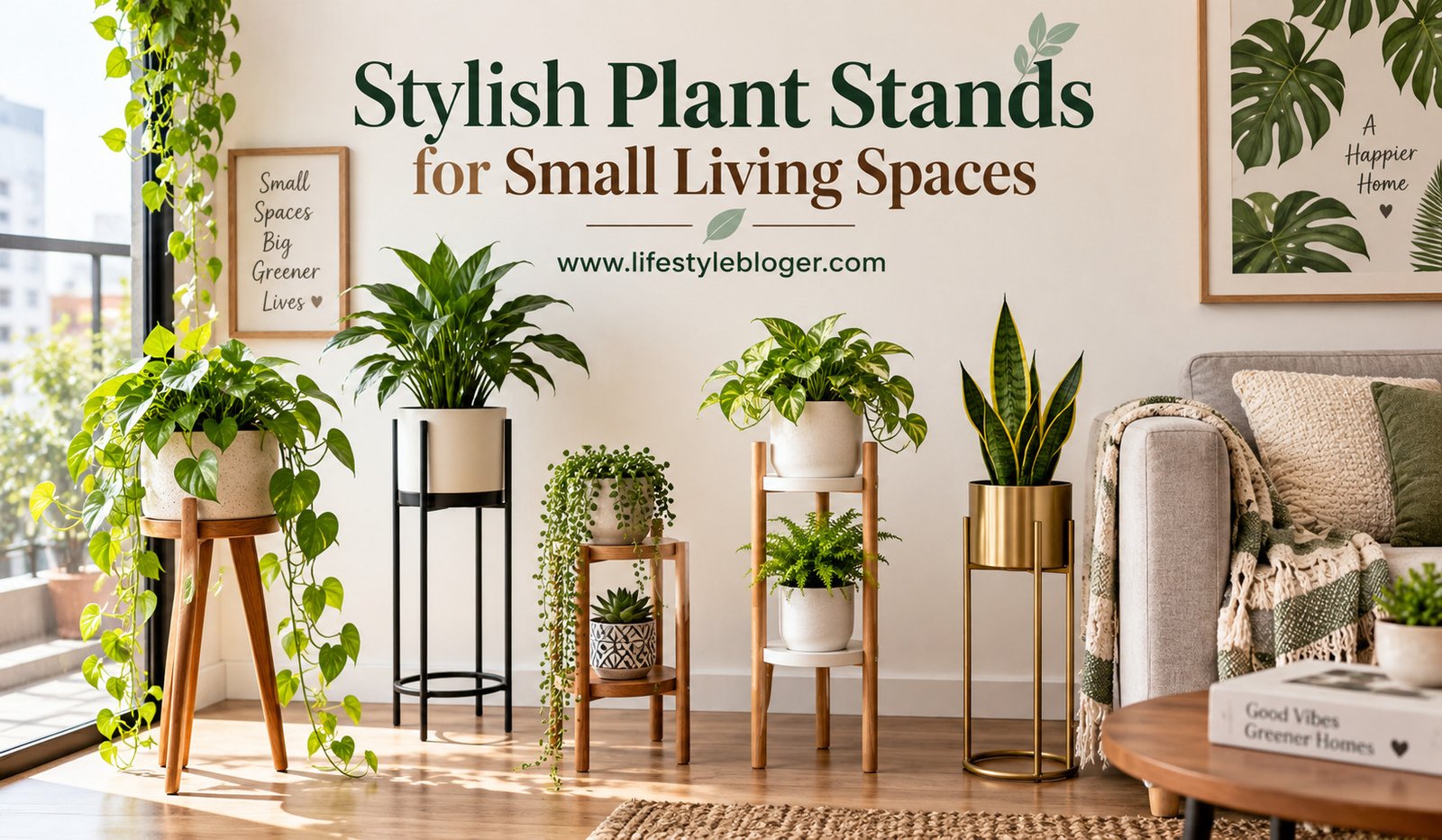
1. Slim Wooden Plant Stands
Wooden plant stands are a timeless option for homes that favor warm and natural décor. Their organic appearance works particularly well with green foliage, creating a relaxed connection between the plant and the surrounding furniture.
For a small room, choose a stand with narrow legs and a compact base rather than a wide, heavy design. A simple wooden stand can elevate a medium-sized plant beside a sofa, armchair, bed, or console without visually overwhelming the area.
Light-colored wood works beautifully in Scandinavian and minimalist interiors, while darker wood can complement traditional or contemporary rooms.
2. Minimalist Metal Plant Stands
If your home has a modern or industrial appearance, a metal plant stand can provide a clean and structured look. Black, white, or neutral metal frames can create a strong contrast against green foliage.
Slim metal stands are especially useful in tight corners because they often have a small footprint. Their open frames also allow light to pass through, which can make them appear less bulky than solid furniture.
Pairing a simple metal stand with a plant that has large or dramatic leaves can create an attractive focal point without requiring additional decoration.
3. Tiered Plant Stands
Tiered plant stands are ideal when you want to display several plants but don’t have enough floor space for multiple individual stands. By arranging plants at different heights, they make better use of vertical space.
A tiered stand can work particularly well near a window, in a living-room corner, or beside a balcony door. Smaller plants can sit on upper levels while larger varieties occupy the lower sections.
When using a tiered stand, avoid filling every level with plants of identical size. Combining different shapes and heights creates a more balanced and visually appealing display.
4. Corner Plant Stands
Corners are often overlooked when decorating small rooms. A corner plant stand is specifically designed to make use of these otherwise difficult spaces.
Triangular or curved designs can fit neatly into corners without extending too far into the room. This allows you to introduce greenery while keeping walkways clear.
A tall corner stand can also draw the eye upward, creating the impression of greater height in the room.
5. Nesting Plant Stands
Nesting stands are a smart option for people who like flexibility. These stands usually include multiple pieces that can be arranged together or separated throughout the room.
When grouped together, they create a layered plant display. When you need more open space, individual stands can be moved to different locations.
This adaptability makes nesting stands particularly practical for compact homes where furniture arrangements may change frequently.
6. Wall-Adjacent Plant Stands
Some plant stands are designed to sit close to walls while using minimal floor depth. These designs are useful for hallways, narrow living rooms, bedrooms, and small entryways.
A wall-adjacent stand can create a vertical green accent without projecting too far into the walking area. Choose one with a stable base and enough clearance from the wall to allow the plant to grow naturally.
Choosing the Right Plant Stand for Your Space
The appearance of a plant stand matters, but its dimensions are even more important in a small home. Before purchasing one, measure the area where you intend to place it.
Consider the stand’s width, depth, and height. A design that looks compact online may feel surprisingly large once placed next to furniture. Leave enough space around the stand so that people can comfortably walk past it.
You should also consider the eventual size of the plant. A small plant on a large stand may look unbalanced, while a large plant on a lightweight stand could become unstable.
| Plant Stand Style | Best For | Décor Style |
| Slim wooden | Small corners and bedrooms | Natural, Scandinavian |
| Metal frame | Modern apartments | Modern, Industrial |
| Tiered | Multiple plants | Contemporary, Eclectic |
| Corner stand | Unused corners | Minimalist |
| Nesting stands | Flexible layouts | Modern |
| Wall-adjacent | Narrow spaces | Urban, Contemporary |
How to Style Plant Stands Without Making a Room Look Crowded
Create Different Heights
One of the easiest ways to make a plant display look intentional is to vary the height of your plants. A tall floor plant can be paired with a medium-sized plant on a stand and a smaller plant on a shelf or table. This layered arrangement adds depth and makes the room feel thoughtfully designed rather than overcrowded.
If you’re using more than one plant stand, avoid placing them in a perfectly straight line. Instead, stagger their heights and positions slightly to create a natural flow throughout the room.
Match the Stand with Your Interior Design
The material and finish of your plant stand should complement your existing décor. Wooden stands blend beautifully with earthy, rustic, or Scandinavian interiors, while black or white metal stands suit modern and industrial spaces.
You don’t have to match every piece of furniture exactly, but choosing similar tones and textures creates a cohesive appearance. Decorative planters can also help tie everything together and make the entire display feel intentional.
Select Plants That Fit the Stand
Every plant has its own shape and growth habit. Upright plants such as snake plants or rubber plants look elegant on taller stands, while trailing plants like pothos or ivy appear more attractive when placed on elevated shelves or tiered stands where the vines can cascade naturally.
Avoid placing oversized pots on delicate stands, as they may appear unbalanced and become difficult to move.
Benefits of Using Plant Stands in Compact Homes
Plant stands offer more than just decorative value. They also improve the functionality of small spaces by helping you organize your indoor garden more efficiently.
Some of the biggest advantages include:
- Making better use of vertical space.
- Keeping floors less cluttered.
- Improving the visibility of your favorite plants.
- Adding style without purchasing bulky furniture.
- Allowing easier cleaning around plant displays.
These practical benefits make plant stands one of the simplest upgrades for apartments and compact homes.
Tips for Choosing the Perfect Plant Stand
Finding the right stand becomes much easier when you consider both your room and your plants.
Keep these points in mind before buying:
- Measure the available floor space carefully.
- Choose sturdy materials that can support the weight of the pot.
- Select a height that complements nearby furniture.
- Ensure the stand allows easy watering and maintenance.
- Pick a design that matches your home’s decorating style.
A little planning will help you choose a stand that remains useful as your indoor garden grows.
Decorating Different Rooms with Plant Stands
Living Room
A stylish plant stand can become an attractive focal point in a small living room. Place a tall stand beside a sofa or entertainment unit to soften the room and introduce natural color. If you have a bright window, position your stand nearby so the plant receives adequate light while enhancing the space.
Bedroom
Bedrooms benefit from calming greenery. A compact wooden or metal stand placed beside a dresser or near a window can make the room feel more peaceful without occupying valuable floor space.
Choose plants with manageable growth habits so they remain proportional to the room.
Entryway
Even the smallest entrance can feel more welcoming with a decorative plant stand. A slim design holding a single statement plant creates a positive first impression while keeping walkways clear.
Home Office
Adding greenery to a workspace can make it feel more inviting. Instead of placing plants directly on your desk, use a small stand beside your work area to keep the surface organized while still enjoying the beauty of indoor plants.
Common Mistakes to Avoid
Many people purchase plant stands based solely on appearance without considering practicality. One common mistake is selecting a stand that’s too large for the available space. Even an attractive stand can make a room feel cramped if it blocks movement.
Another mistake is overcrowding multiple stands with too many plants. Leaving some empty space around each display helps every plant stand out while maintaining an open atmosphere.
Finally, remember that lighting matters. A beautiful plant stand is only effective if the plant placed on it receives enough light to remain healthy.
Make Your Small Space Feel Bigger with Vertical Greenery
Decorating a small home requires creativity, and plant stands provide an excellent solution. Instead of filling valuable floor space with numerous pots, they allow you to display greenery vertically while maintaining a clean, organized appearance.
Whether you prefer sleek metal frames, warm wooden designs, corner stands, or tiered displays, there is a style suitable for every interior. By choosing the right combination of stand, planter, and plant, you can transform even the smallest room into a fresh and welcoming living space.
Frequently Asked Questions
1. Are plant stands suitable for apartments?
Yes. Plant stands are perfect for apartments because they maximize vertical space while keeping the floor uncluttered. They allow you to enjoy multiple plants even in compact rooms.
2. Which material is best for indoor plant stands?
Wood and metal are the most popular options. Wooden stands provide a warm, natural look, while metal stands offer a modern appearance and excellent durability.
3. Can I place heavy pots on plant stands?
Yes, but always choose a stand designed to support the weight of your pot. Check the product’s weight capacity before purchasing and ensure it has a sturdy base.
4. Where should I place a plant stand in a small room?
Unused corners, spaces beside sofas, areas near windows, and entryways are ideal locations. Make sure the stand doesn’t block walkways or doors.
5. How many plant stands should I use in a small living space?
Two or three carefully positioned plant stands are usually enough for most compact homes. Focus on quality placement rather than filling every available corner.
Final Thoughts
Stylish plant stands are an excellent investment for anyone looking to decorate a small living space with greenery. They make better use of vertical space, enhance the visual appeal of indoor plants, and create a more organized environment without overwhelming the room.
The secret lies in selecting stands that match your décor, suit your available space, and complement the plants you choose. Whether you opt for a minimalist metal frame, a timeless wooden stand, or a versatile tiered design, the right plant stand can instantly elevate your home’s interior.
With thoughtful placement and a balanced arrangement, even the smallest apartment can become a refreshing green retreat that feels spacious, inviting, and full of life.